






Meet 'The Volume': Hollywood's New Holodeck
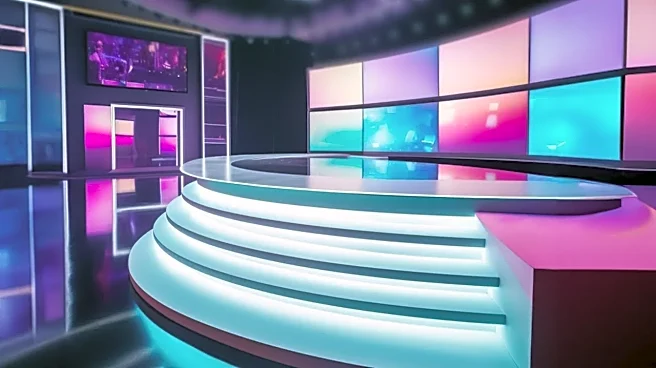
The game-changing technology is called StageCraft, but it's more commonly known by its nickname: The Volume. Developed by Industrial Light & Magic, it’s a massive, curved soundstage made of high-resolution LED screens for the walls and ceiling. Instead
of acting against a green screen and imagining a dragon-filled sky, actors are immersed in a digital environment that's rendered in real-time. If the camera moves, the background perspective shifts with it, creating a seamless illusion. When it debuted on "The Mandalorian," it was hailed as a revolution—a way to shoot complex visual effects in-camera, saving immense time and money on post-production and location travel. It also provides realistic lighting and reflections on actors' costumes and faces, something green screens notoriously struggle with.
The Promise: A Shortcut to Anywhere
For producers, The Volume is the ultimate shortcut. Need to shoot a scene on a desolate ice planet at sunset? No need to fly a crew to Iceland and hope the weather holds. The environment can be loaded up on the LED walls, and that perfect “golden hour” light can last all day. This controlled environment streamlines production, allowing directors to get final-looking shots on the day of filming. It helps actors deliver more grounded performances because they can see and react to the world around them. For a certain type of scene—like the moody, rain-slicked cityscapes of "The Batman" or the confined cockpits in "Star Wars"—the technology is virtually flawless, blending practical sets with digital extensions invisibly. It promised blockbuster visuals on a television schedule, and for a while, it delivered.
The Paradox: An Expensive, Artificial Look
Here's the twist: the very tool designed for immersive realism can make a scene look surprisingly fake. The biggest issue is lighting. While The Volume emits light, it often creates a flat, diffuse glow that lacks the harsh shadows and dynamic range of natural sunlight. Outdoor daytime scenes, in particular, can look washed out and lack depth, making a multi-million dollar set feel like a stage play. The limited physical size of the stage can also be a problem. Action sequences, like chases, can feel constrained and lack forward momentum because the actors can't truly move through a large space. Furthermore, the interaction between the camera's sensor and the LED panels can create visual artifacts like moiré patterns (weird, wavy lines) or flickering that technicians have to constantly fight to eliminate. This often requires shooting with a shallow depth of field, leaving backgrounds perpetually out of focus and contributing to a sense of claustrophobia.
A Tool, Not a Magic Wand
The divide in quality comes down to how the technology is used. On "The Mandalorian," cinematographer Greig Fraser pioneered its use for specific, controlled environments. But as The Volume became more widespread, some productions began using it as a one-size-fits-all replacement for location shooting, with disastrous results. Shows like "Obi-Wan Kenobi" and films like "Ant-Man and the Wasp: Quantumania" were criticized for looking small and visually bland, with actors seeming to stand in front of a flat backdrop rather than within a world. Experts note that the technology is at its weakest when trying to replicate vast, organic landscapes in broad daylight. It requires immense planning and pre-visualization to work effectively, something not all productions can afford or manage. Success stories like "The Batman" prove The Volume is an incredible tool when used for its strengths—creating controlled, stylized lighting and environments—rather than as a crutch for every scene.