
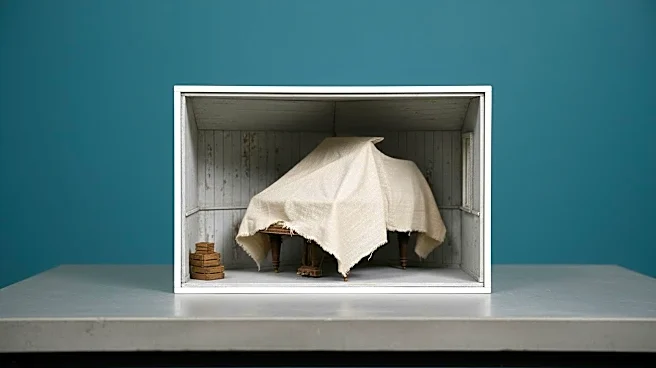
The Power of Negative Space
In the world of horror design, there's a constant battle between overwhelming the audience and guiding their imagination. While a room dripping with gore and crowded with detail can be shocking, it doesn't always linger. The genius of the Halloween Horror
Nights creative team often lies in their restraint. By placing a single, evocative object in a carefully lit space, they weaponize the guest's own mind. An empty rocking chair in a dimly lit nursery is infinitely more terrifying than a room full of screaming monsters because it doesn't tell you what to fear—it asks you what might have happened there, and what might happen next. This approach transforms the guest from a passive observer into an active participant in their own dread. The brain, desperate to fill in the blanks, conjures horrors far more personal and potent than any designer could build.
Storytelling Through Objects
Every prop at HHN is a piece of a story, but the most effective ones tell a complete narrative all by themselves. Think of the iconic lantern, a recurring symbol often associated with the event's lorekeepers and icons. On its own, it’s just a light source. But in the context of a dark maze, it represents a choice: a beacon of hope or a lure into a trap. Similarly, fans fondly recall specific set pieces like the giant, swinging pendulum from a "Saw"-themed house or the unsettling doll displays from the "Monstruos" maze. These weren't just background decorations; they were the focal point of the terror, the physical manifestation of the story's threat. A blood-stained surgical tray in an asylum doesn't just set the scene; it implies a gruesome procedure just moments before your arrival, making the unseen doctor the primary source of fear. The design principle is simple: show the effect, and the audience will invent the cause.
Directing the Eye, and the Fear
Haunted attraction design is a masterclass in manipulation. The creators use light and sound to control exactly where you look and, more importantly, where you don't. A single, brightly lit object in an otherwise dark room—a music box on a dresser, a static-filled television, a lone telephone ringing off the hook—acts as a spotlight. It draws your attention with surgical precision. This forced focus achieves two things. First, it ensures you see the creepy doll, but it also makes you completely vulnerable to the scareactor hiding in the darkness to your left. This technique, known as misdirection, is a cornerstone of the haunt industry. The prop becomes the setup, and the actor delivers the punchline. It’s a symbiotic relationship where the inanimate object gives the lurking monster its power.
Less Detail, More Dread
This philosophy mirrors a trend seen in psychological horror games that mimic the low-fidelity graphics of the original PlayStation. These games prove that hyper-realism isn't a prerequisite for fear. In fact, ambiguity is often scarier. When a prop or a scene is stripped of excessive detail, it becomes more universal and archetypal. A derelict, half-sunk riverboat set piece, praised by fans for its uneven floors, created a powerful sense of unease not just because of what you saw, but because of the physical feeling of instability it induced. The designers at Halloween Horror Nights understand this concept intimately. Lower light levels mean scenes require less intricate detail, allowing the darkness itself to become a primary design element. That singular, focused prop becomes an anchor in a sea of terrifying possibility, proving that true horror isn't about what you see, but what you imagine is hiding just out of sight.