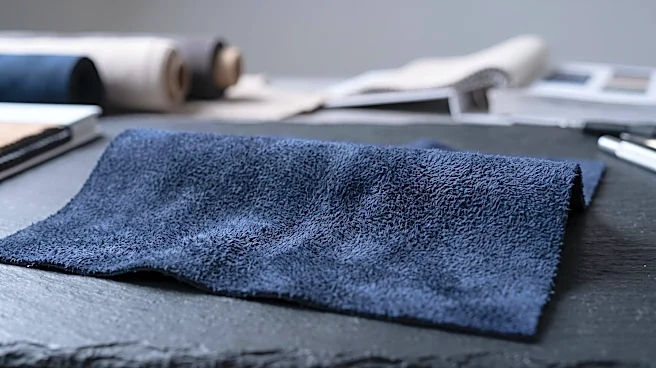





That fuzzy, dream-like halo on a mohair sweater is the height of cozy luxury. But achieving that signature look involves a trade-off. Brushing, the technique that gives mohair its airy softness, fundamentally changes the fiber, for better and for worse.
The Allure of the Halo
First, let's appreciate mohair for what it is: a remarkable natural fiber from the Angora goat. It's known for its incredible luster, durability, and lightweight warmth. Unlike sheep's wool, mohair fibers are smoother and have less pronounced scales, which gives them a natural sheen and less of an 'itch' factor for many people. Unbrushed mohair is sleek and shiny. But the 'brushed mohair' most of us picture is the result of a specific finishing process where the fabric or yarn is mechanically brushed to lift individual fibers from the core structure. This technique creates the iconic soft, fuzzy 'halo' that gives garments a dimensional, almost ethereal quality.
The Science of Fluff and Warmth
The primary reason to brush mohair is to increase its warmth and softness. When you brush the fibers, you're essentially teasing them out from their tightly spun yarn structure. This process creates millions of tiny, individual air pockets within the fabric's surface. Air is an excellent insulator, and by trapping more of it, the brushed mohair becomes significantly warmer without adding bulk. Think of it like the difference between a flat sheet and a fluffy down comforter; both can be made of the same materials, but the loft of the comforter is what traps body heat so effectively. This is why a lightweight, brushed mohair sweater can feel as warm as a much heavier wool one.
The Inevitable Trade-Off: Weakness and Shedding
Here's the catch: while mohair is an exceptionally strong fiber—stronger than steel of the same diameter, according to some textile experts—the act of brushing introduces a point of weakness. The process can physically break some of the delicate fibers. More commonly, it pulls fibers partially or fully out of the yarn's twisted core. This is why brushed mohair garments are notoriously prone to shedding, especially when new. Each of those floating fibers you see is a piece that has been loosened from the garment's structure. While this doesn't mean your sweater will unravel overnight, excessive or aggressive brushing can lead to a less durable fabric over time, with a greater potential for pilling and thinning.
A Practical Guide to Brushing Mohair
Whether you're reviving a favorite sweater or finishing a hand-knit project, there's a right way to brush mohair to maximize fluff and minimize damage. First, only brush the garment when it is completely dry; wet fibers are more fragile and prone to stretching and breaking. Use a dedicated tool, like a soft, natural-bristle brush or a specific mohair comb—never a harsh brush that can snag and pull threads. Lay the garment on a flat surface and brush gently, in one direction, using light, even strokes. The goal is to lift the existing halo, not to create a new one from scratch by aggressively roughing up the surface. Remember that some shedding is normal, but if you see a lot of fiber coming off, you're likely brushing too hard. A little goes a long way.