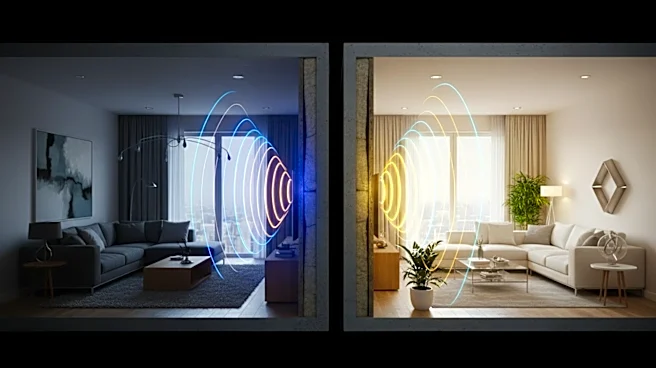












The Ghost in the Machine
You hear a sneeze and instinctively think “bless you,” only to realize it came from the other side of the wall. Or you feel the vibration of a dropped object from two floors up, yet the party next door is completely silent. This isn’t your building being
haunted; it’s a lesson in building acoustics. The sounds that connect us, whether we like it or not, travel along hidden highways. These pathways are often called “sound bridges,” and they are the reason why the acoustic geography of an apartment building is so strange and unpredictable. They turn separate, private spaces into a single, interconnected web of mysterious noises, creating a shared experience among strangers.
Two Types of Intruders
To understand the mystery, you first have to know the culprits. Sound travels in two primary ways in a building: through the air and through the structure itself. Airborne sound is what you’d expect: voices, music, or a barking dog traveling through the air. When these sound waves hit a wall, they make it vibrate, transmitting a muffled version into your space. Structure-borne sound, however, is the more surprising and often more annoying of the two. This is noise that starts as a direct impact on the building’s frame—like footsteps, a dropped weight, or a vibrating washing machine. That energy doesn't travel through the air; it uses the solid materials of the building—the wood beams, concrete slabs, and steel supports—as a superhighway. Because this energy travels through solids, it can journey surprisingly far, which is why you might hear your upstairs neighbor's footsteps more clearly than their conversation.
Secrets of the Sound Bridge
A sound bridge is any element that allows vibrations to bypass insulation and travel directly from one area to another. Think of the classic two-cans-and-a-string phone you made as a kid; the taut string is a perfect, simple sound bridge. In a building, these bridges are unintentionally built into the design. A common example is a metal stud that connects the drywall in your apartment to the drywall in your neighbor’s. While the wall cavity might be filled with insulation, the rigid stud acts as a direct pathway for vibration. But the most mystifying sounds often travel along even more complex routes known as flanking paths. Sound can flank, or bypass, a well-insulated wall by traveling through a connected floor, a shared ceiling, or even the building's facade. This explains why a noise might seem to come from the wall in front of you when its source is actually two floors down and one unit over. Plumbing pipes, HVAC ducts, and even recessed lighting fixtures can all act as conduits, connecting disparate parts of the building in acoustically unexpected ways.
Modern Buildings, Modern Noise
One might assume that newer, more modern buildings would be quieter, but that's not always the case. The trend toward open-plan layouts and the use of lightweight construction materials can sometimes exacerbate noise issues. While a massive, thick concrete wall from an older building is great at blocking airborne sound due to its sheer mass, some modern lightweight structures can be more susceptible to transmitting structure-borne vibrations. Furthermore, architectural features like floor-to-ceiling glass can look stunning but often reflect sound rather than absorb it, contributing to a livelier and sometimes noisier interior. Even the smallest gaps, such as those around electrical outlets or unsealed joints where the wall meets the floor, can compromise an otherwise well-constructed wall, letting sound leak through.