

A Vision of Pop Royalty
When costume designer Gabriella Slade first signed on to the project, the concept was irresistible: what if Henry VIII’s wives formed a contemporary pop group? The idea of blending 16th-century history with 21st-century pop culture became her guiding
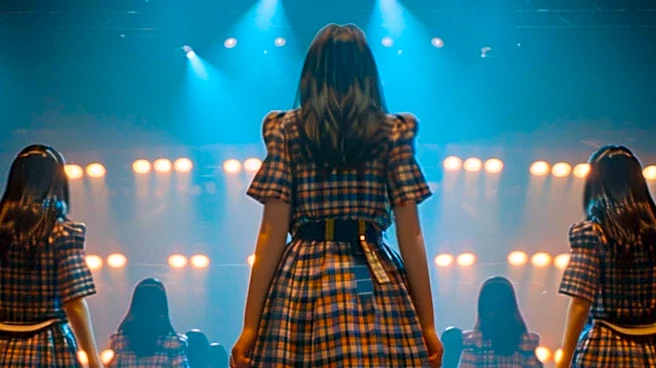
principle. Slade deliberately steered away from creating historically accurate garments. Instead, her goal was to build a visual language that supported the show’s central theme: giving these women back their voices and power. The result is a collection of outfits that feel both referential and revolutionary. They aren’t delicate period pieces to be handled with care; they are battle-ready ensembles for a pop concert spectacle, designed to be seen from the back row under dazzling stage lights.
Deconstructing Tudor Armor
The term “armor” is key to understanding Slade’s work. Instead of the restrictive whalebone and delicate fabrics of the era, the queens of SIX are clad in materials of strength and resilience. Think PVC, metallic foils, leatherette, and an abundance of studs. These materials are not just for show; they create a hard, protective shell. The corsets, often seen as symbols of female confinement, are reimagined here as powerful bodices, more akin to a superhero's breastplate than a lady-in-waiting's undergarment. While the square necklines and sleeve silhouettes give a clear nod to Tudor fashion, their construction is entirely modern. The studding and lattice work, for instance, evoke the ornate embellishments seen in royal portraits, but are executed with a punk-rock edge. It’s a design choice that says these women are not fragile victims of history but defiant survivors ready for a fight.
From Historical Figures to Pop Icons
To make the concept click, each queen was linked with a modern pop diva, giving Slade a rich palette of inspiration. Catherine of Aragon, the defiant first wife, channels the commanding stage presence of Beyoncé. Anne Boleyn, the rebellious and flirty one, is infused with the punk-pop energy of artists like Miley Cyrus and Avril Lavigne. Jane Seymour’s soulful power ballad, “Heart of Stone,” is reflected in a look inspired by powerhouse vocalists Adele and Sia. The bold, in-your-face style of Anne of Cleves draws from the unapologetic swagger of Nicki Minaj and Rihanna. Katherine Howard’s story of youth and exploitation is filtered through the bubblegum-pop aesthetic of Ariana Grande, while Catherine Parr, the survivor who brings everyone together, embodies the soulful elegance of Alicia Keys. These modern archetypes give the audience an instant cultural shorthand for understanding each queen's personality and story.
A Tony-Winning Triumph
The impact of Slade’s designs cannot be overstated. In a show with a single static set and no costume changes, the outfits do a tremendous amount of narrative work, establishing character, tone, and theme from the very first beat. The cohesion of the group is maintained through shared elements like studded boots and a black-and-silver base palette, while each queen’s individual color and distinct silhouette lets her personality shine. The work was a critical smash, earning Gabriella Slade a Tony Award for Best Costume Design in a Musical in 2022, along with a Drama Desk Award and an Olivier Award nomination. More than just clothes, the costumes have become synonymous with the show's global success, inspiring countless pieces of fan art and cosplay, and cementing the image of these six historical women as eternal pop queens in their own right.