








The Art of Getting Lost
In the original 2001 “Silent Hill 2,” the town was a character, and its primary trait was disorientation. The dense, oppressive fog wasn’t just a graphical trick to hide technical limitations; it was a narrative tool. It forced players to feel as lost
and uncertain as the protagonist, James Sunderland. Navigation was deliberately difficult. With fixed camera angles that obscured your view and a map you had to constantly check, the act of finding your way was an integral part of the psychological horror. You weren't just exploring a place; you were fighting against it. This intentional confusion, this feeling of being swallowed by an indifferent, labyrinthine world, was the entire point. The horror came from the unknown and the struggle to simply move forward.
The Modern Compass Problem
Modern game design generally abhors true disorientation. Players are now accustomed to a steady stream of guidance: mini-maps with clear objective markers, glowing paint on climbable ledges, and intuitive, over-the-shoulder cameras that grant a clear view of the path ahead. These quality-of-life improvements make games more accessible, but they pose a philosophical problem for a remake of a game built on confusion. Developer Bloober Team, tasked with remaking “Silent Hill 2,” faced a critical choice: preserve the frustrating-by-design navigation of the original or modernize it and risk losing a key part of its soul. Keeping the story true to the original while updating the gameplay for current expectations became their central challenge.
Guidance Through Light and Shadow
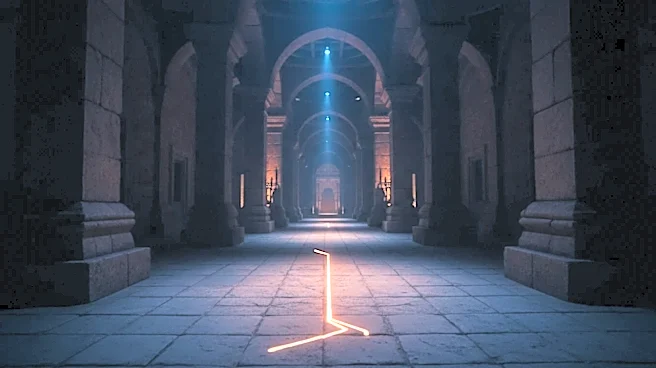
Instead of littering the screen with icons, the “Silent Hill 2” remake appears to be embedding its wayfinding directly into the environment. The move to an over-the-shoulder camera fundamentally changes the experience, adding a sense of realism and immersion that even the original's director felt was an improvement over the technically limited fixed cameras of 2001. Developers have spoken about using light, darkness, and environmental objects to subtly guide the player, maintaining the feeling of dread without causing undue frustration. A flickering streetlamp isn't just atmosphere; it's a soft suggestion of which direction to take. An open doorway spilling light into a dark alley serves as an invitation. This approach turns the environment itself into the guide, a technique Bloober Team is noted for, with one producer praising their talent for creating atmosphere and using the environment to convey what the character is feeling.
Navigation as Narrative
This is where wayfinding becomes a visual thesis. The new design doesn’t just tell you where to go; it shapes how you feel about going there. By replacing an explicit user interface with implicit environmental cues, the developers can control pacing and tension with surgical precision. A well-lit path might offer a moment of perceived safety, only to lead into a carefully constructed ambush. The famous fog, still a crucial element, now serves to obscure the truth from James as he moves through the town, its density and behavior reflecting his internal state. The creative director noted that they were able to expand on how James perceives his world and torment through the environment. In this way, the act of navigating Silent Hill is no longer just about getting from point A to B. It’s a visual representation of the character's psychological journey—a path paved with his own fear, guilt, and fleeting hopes.