



The 48-Team Chaos Engine
For the first time ever, 48 nations will compete for soccer’s ultimate prize, up from the 32-team format we’ve known since 1998. This isn’t just a minor tweak; it’s a fundamental change to the tournament's DNA. The group stage will now consist of 12 groups of four teams, with the top two and the eight best third-place teams advancing to a new Round of 32. This expansion creates more pathways for underdog nations from Asia, Africa, and North America to not only qualify but also make a surprise run. The downside? A potentially grueling eight-match journey to the final. The addition of a whole new knockout round introduces another layer of unpredictability. One bad game, one unlucky bounce, and a tournament favorite could be sent packing earlier
than ever. This format guarantees more games (104, up from 64), but it also guarantees more potential for giant-killings and Cinderella stories.
A Host Team Unlike Any Other
When the U.S. hosted in 1994, the men's national team was a collection of plucky underdogs, many pulled from the college ranks. In 2026, the story is completely different. The USMNT will feature its “golden generation” of European-based stars—Christian Pulisic, Weston McKennie, Tyler Adams, Gio Reyna—all in their athletic prime, likely between the ages of 26 and 29. They aren't just hosts; they are a team with legitimate ambitions of making a deep run. The pressure of playing on home soil, with the automatic qualification removing the trial-by-fire of CONCACAF, creates a unique psychological test. Will they rise to the occasion and deliver a generation-defining performance like France in ‘98? Or will the weight of expectation prove too much? For the first time, the U.S. enters a World Cup not as a hopeful participant, but as a team that is expected to perform.
Life After the G.O.A.T.s
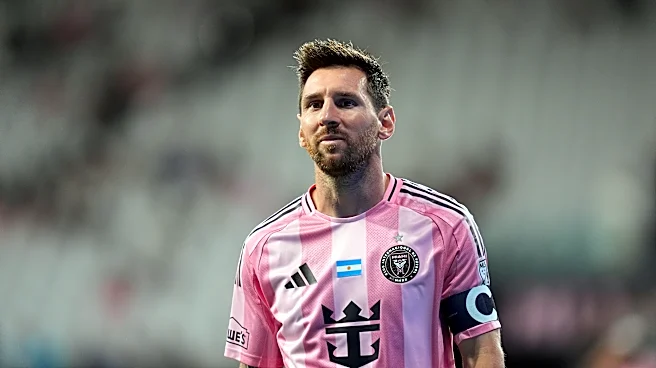
The 2022 World Cup in Qatar felt like a grand finale for an entire era, culminating in Lionel Messi finally capturing the one trophy that had eluded him. By 2026, Messi will be 39 and Cristiano Ronaldo will be 41. While it’s not impossible they’ll be involved in some capacity, their two-decade reign over the sport’s narrative will be over. This leaves a massive power vacuum at the top of the game. France’s Kylian Mbappé is the heir apparent, but who else will step up to seize the global spotlight? Will it be goal-machine Erling Haaland, finally making his World Cup debut with Norway? Or perhaps Brazil’s Vinícius Júnior? The 2026 tournament will be the first in a generation where the question isn’t “Can Messi or Ronaldo do it?” but rather, “Who will define the next decade of football?”
The Rise of a New Contender?
The World Cup has been dominated by two continents: Europe and South America. No team from outside this elite club has ever reached a final. Morocco’s electrifying semi-final run in 2022 cracked the door open, proving that a well-organized, passionate team from Africa could go toe-to-toe with the world’s best. The expanded 48-team format gives more slots to the African (CAF) and Asian (AFC) confederations, increasing the odds that another powerful, pattern-breaking team emerges. Nations like Senegal, Japan, and South Korea have already shown they can compete in the knockout stages. With a larger field and a more volatile format, 2026 presents the best chance yet for a true outsider to shatter the old world order and make a legitimate push for the final.
The Great North American Road Trip
Hosting a World Cup in one nation is a massive logistical challenge. Hosting it across three countries and four time zones is a continent-spanning experiment. Teams could play a group stage match in the summer heat of Guadalajara, Mexico, and find themselves in a knockout game in the cooler climate of Vancouver, Canada, just days later. The travel demands will be a significant factor, potentially favoring teams with deep squads and excellent fitness management. It also creates fascinating questions about home-field advantage. While the US, Mexico, and Canada will have their home crowds, will a team like Brazil or Argentina find a de facto home base in soccer-crazed cities like Miami or Los Angeles? Managing the travel, acclimatization, and diverse conditions will be a tactical challenge as significant as anything happening on the pitch.