



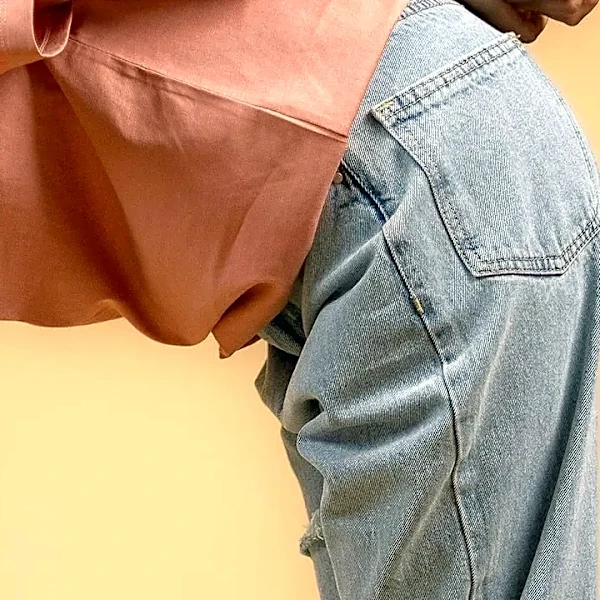



Remember the 'Zoom shirt'? That one nice top you kept on a chair for video calls while wearing sweatpants below? That single garment tells the entire story of how the meaning of professional clothing has been completely upended.
The Age of the Suit
For much of the 20th century,
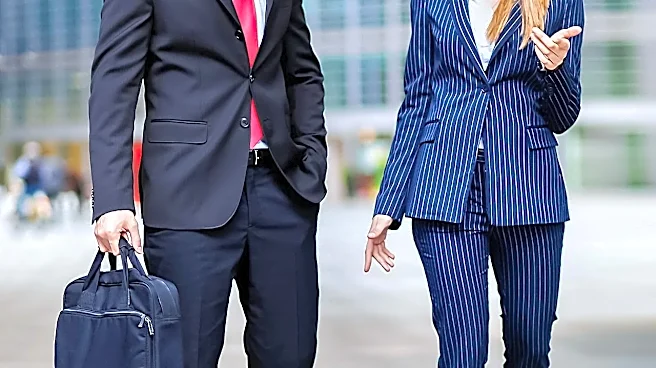
'professional' meant one thing: a suit. For men, it was a dark suit, a starched shirt, and a tie. For women, it was a tailored suit or a conservative dress. This uniform wasn't just about clothes; it was a non-verbal signal of seriousness, conformity, and respect for a clear corporate hierarchy. The lines were clear: you wore executive attire in the office and casual clothes at home. This rigid standard was the unquestioned bedrock of workplace appearance for decades.
The Birth of Business Casual
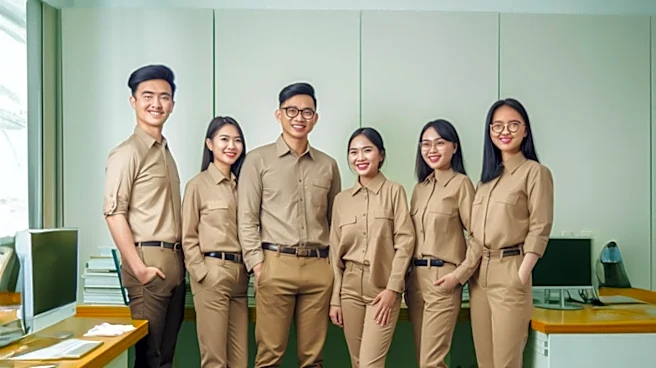
The first crack in the armor of formality came from an unlikely place: Hawaii. In the 1960s, a campaign to promote the local garment industry led to 'Aloha Fridays,' where wearing Hawaiian shirts to work was encouraged. This idea lay dormant on the mainland until the recession-hit 1990s, when companies, looking for a free way to boost morale, introduced 'Casual Fridays'. Seeing an opportunity, Levi's, the new owner of the Dockers brand, sent a brochure titled 'A Guide to Casual Businesswear' to thousands of HR managers, brilliantly defining the new, khaki-and-polo-shirt-filled space between a suit and jeans. The concept exploded, and by the late 90s, the vast majority of U.S. companies had a casual dress policy.
The Silicon Valley Disruption
While the East Coast was cautiously unbuttoning its collars, a revolution was happening out West. In Silicon Valley, a new generation of tech founders actively rebelled against the buttoned-up corporate culture of giants like IBM. They established a new ethos where your output—your code—mattered infinitely more than what you wore. The hoodie, t-shirt, and sneakers became a new kind of power suit. In this world, wearing a traditional suit could signal you were an outsider—a lawyer or banker asking for money, not the innovator making the decisions. This 'anti-dress code' sent a powerful message: you can be serious without a suit.
The Pandemic's Great Wardrobe Reset
If business casual was a crack and Silicon Valley was a tremor, the COVID‐19 pandemic was the earthquake that shattered the foundation. Overnight, office dress codes became irrelevant. As millions began working from home, comfort became the primary driver of fashion. The 'Zoom‐ready' mullet outfit—professional on top, comfort on the bottom—became a widespread phenomenon. This extended period of remote work fundamentally changed our relationship with professional attire, proving that productivity was not tied to wearing a specific set of clothes. Companies discovered that work got done whether employees were in suits or sweatpants.
The Hybrid Work Conundrum
Now, in the hybrid era, we're left in a state of stylish confusion. The old rules are gone, but the new ones are unwritten. Many companies have adopted vague 'Dress for Your Day' policies, leaving employees to decode the expectations for themselves. This has created a new definition of professional dressing, one based on context and intention. A client meeting might call for a blazer, while a quiet day of internal work might be fine for clean denim and quality sneakers. The new 'uniform' is a flexible rotation of smart, comfortable, and versatile pieces like unconstructed blazers, tailored stretch trousers, and premium knitwear. Professionalism is no longer a costume you put on.