

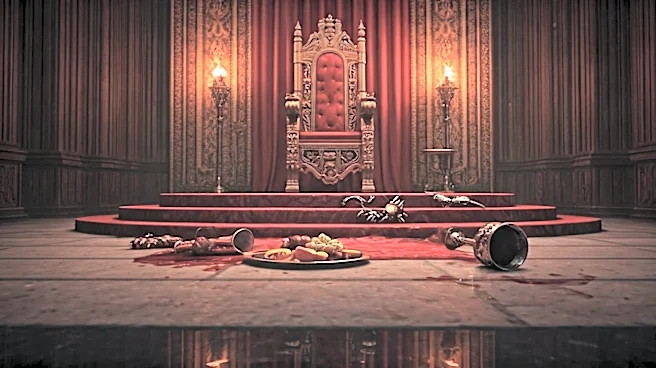


A Conflict Built for Two
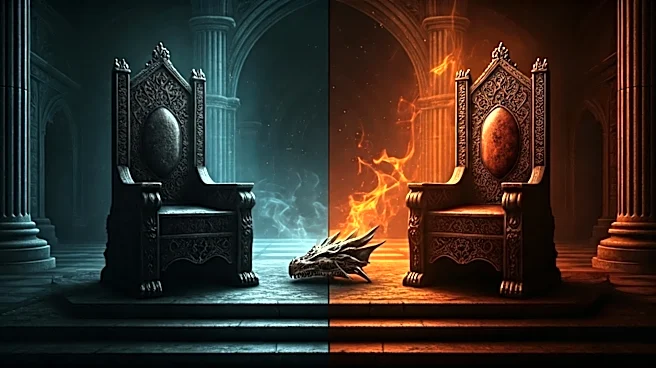
Unlike the sprawling, multi-family saga of *Game of Thrones*, *House of the Dragon* narrows its focus to a singular, devastating family feud. At its heart, the conflict isn't between Stark and Lannister, but between two women who grew up as friends: Rhaenyra
Targaryen and Alicent Hightower. The show dedicates its entire first season to establishing their bond and its heartbreaking dissolution. By framing the dynastic war through this intensely personal lens, the writers force viewers to engage on an emotional level. You’re not just watching a political dispute; you’re watching a friendship curdle into hatred. This invites audiences to empathize with one woman’s perceived betrayal or the other’s agonizing duty, making it almost impossible to remain a neutral observer.
The Genius of Moral Grayness
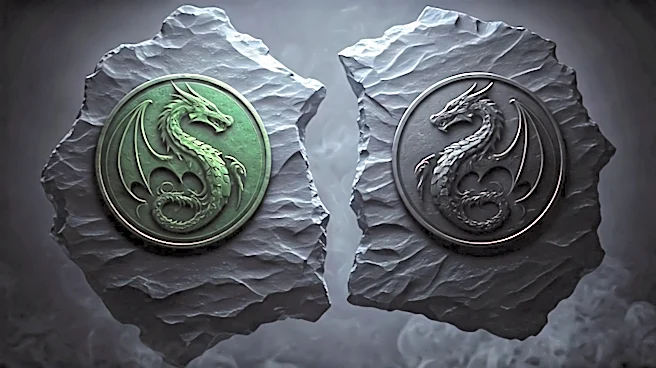
There are no heroes in this story. That’s the point. If you’re on Team Black, you’re backing Rhaenyra, the named heir whose claim is being usurped. She’s a symbol of breaking patriarchal tradition. But she’s also impulsive, entitled, and makes questionable moral choices in her pursuit of power and pleasure. If you’re Team Green, you’re siding with Alicent, a woman trying to protect her children and uphold the established laws of the realm. She is a figure of piety and tradition. Yet her righteousness is curdled by paranoia, fueled by her manipulative father, and ultimately leads her to support a coup against her former friend. Every character is flawed. Every noble action is tainted by self-interest or tragic miscalculation. The show constantly presents you with two bad options and asks which one you can live with, forcing you to pick a side based on which character’s flaws you find more forgivable.
Inherited From an Unreliable Narrator
This ambiguity is a direct inheritance from George R.R. Martin’s source material, *Fire & Blood*. The book is not a novel; it’s written as a fictional history compiled by an Archmaester piecing together accounts from biased sources—a spiteful septon, a gossip-loving court fool, and a grand maester. The “truth” is never clear. The show cleverly translates this literary device to the screen. While it presents a single, linear narrative, it often frames scenes tightly from one character’s point of view. In one episode, you feel Alicent’s terror as her son’s legitimacy is threatened. In the next, you feel Rhaenyra’s fury at having her birthright questioned. By controlling the flow of information and empathy, the showrunners ensure that at any given moment, one side feels more “right” than the other, encouraging viewers to dig their heels in and defend the perspective they just witnessed.
Fandom in a Polarized World
Let’s be honest: we’re primed for this. We live in an era of intense political and cultural polarization, where picking a team is second nature. Online fandom provides a lower-stakes arena to engage in the same tribal instincts. The “Team Green” vs. “Team Black” debate mirrors the dynamics of a political primary, complete with memes, attack ads (in the form of fancams), and endless arguments over who said what. It’s a way for viewers to participate actively in the story, not just consume it. The show's binary conflict maps perfectly onto the architecture of social media, which rewards strong opinions and binary choices. Arguing about whether Alicent is a victim of the patriarchy or Rhaenyra is a reckless tyrant is, for many, a core part of the viewing experience. It builds community, drives engagement, and keeps the show at the center of the cultural conversation.