


More Than Just Wardrobe
Great costume design is far more than just putting actors in clothes; it’s a deliberate act of storytelling. Designers are visual psychologists, embedding clues about a character's personality, social status, and inner turmoil into every piece of fabric.
Is a suit perfectly tailored or slightly too big? Is a shirt crisp and clean or frayed at the cuffs? These aren't accidents. They are the first brushstrokes in painting a character's portrait, establishing a baseline from which they will either evolve or unravel. A character who starts in restrictive, buttoned-up clothing may be signaling a repressed nature, setting the stage for a dramatic shift toward looser, more freeing attire as they find their voice. This visual shorthand is incredibly efficient, planting seeds in the audience's mind subconsciously.
The Power of a Color Palette
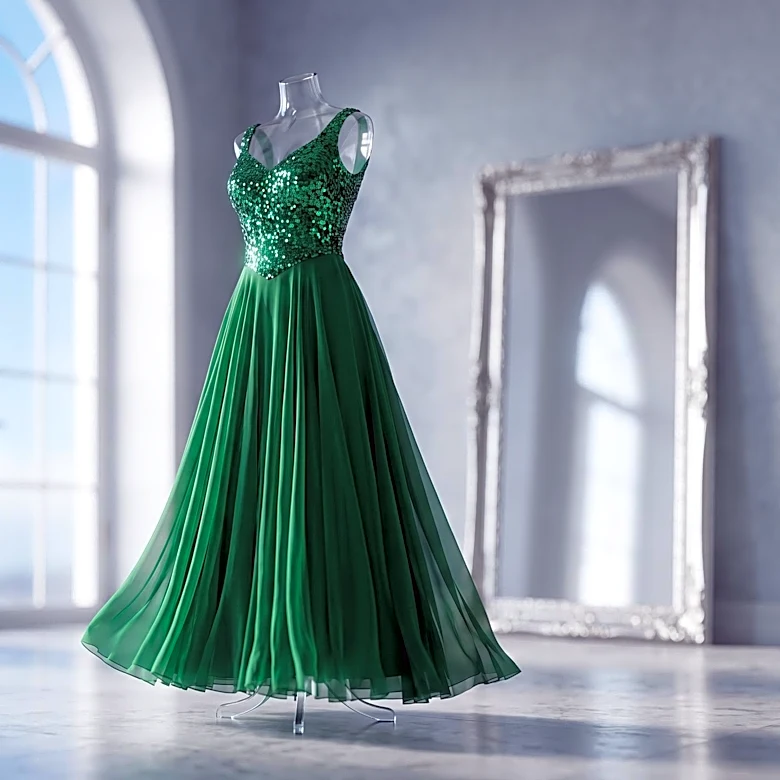
Color is perhaps the most powerful tool in a costume designer’s kit, functioning as an emotional barometer for a character’s journey. One of the most cited examples is Walter White in Breaking Bad. The show’s creator, Vince Gilligan, and his team used a deliberate color theory to track Walt's moral decay. He begins the series in a world of bland beiges and unassuming greens, the palette of a milquetoast chemistry teacher. As he descends into the criminal underworld, his wardrobe darkens, but more importantly, green becomes a dominant color, symbolizing greed and money. In contrast, his wife Skyler often wears blue, representing a conflicting loyalty and sadness. This isn't unique to television; from Scarlett O'Hara’s symbolic green and red dresses in Gone with the Wind to Luke Skywalker's journey from innocent white to conflicted black, color palettes provide a roadmap to a character's soul.
When Fit and Texture Tell the Story
The very fit and feel of a character's clothing can mirror their internal state or shifting circumstances. A pristine, perfectly tailored suit can signal power, confidence, and control, while the same suit, slightly rumpled or ill-fitting, can suggest a character is losing their grip. In HBO's Succession, the wardrobe is a masterclass in this principle. The Roy siblings' proximity to power can often be tracked by how they dress. Kendall Roy’s journey is particularly telling; his attempts to project a modern, disruptive image through expensive but often contextually awkward streetwear (like a $500 pair of sneakers) betray his desperation. His clothes are a costume of competence he's trying to wear. Contrast this with characters whose clothes become literally and figuratively worn down, reflecting a difficult journey or internal struggle. The texture—from luxurious cashmere to rough, simple linen—speaks volumes about a character's status and comfort in their own skin.
The Single, Symbolic Object
Sometimes, an entire arc is contained within a single, recurring detail. It could be a piece of jewelry, a hat, or a pin that appears, disappears, or transforms over time. In Mad Men, Peggy Olson’s evolution from a naive secretary in girlish Peter Pan collars to a confident, formidable copy chief in bold patterns and more sophisticated silhouettes is one of television's most celebrated costume arcs. Her initial wardrobe was intentionally dated, rooted in 1950s fashion to highlight her innocence. In Psycho, Marion Crane wears a white bra at the start of the film, switches to a black one after stealing money, and is back in a white one when she decides to return it—a simple, stark telegraphing of her moral state. These small, deliberate choices reward attentive viewers, adding a layer of richness and intentionality to the story being told on screen.