


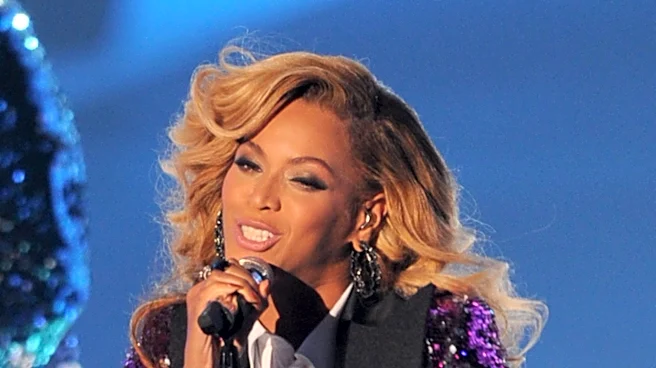
The War for Our Attention
Let's be honest: almost no one just watches television anymore. They watch TV while scrolling through their phone, reacting on social media, and texting their friends. The VMAs are no longer a singular broadcast; they are a multi-platform content storm.
A performance doesn't just need to be good, it needs to be immediately arresting enough to stop the scroll. That first 15 seconds is an artist's one shot to create a visual or sonic hook so compelling that it demands full attention. It needs to be instantly clippable, GIF-able, and meme-able. A slow start, a confusing concept, or a low-energy opening risks being ignored before the first chorus even hits. Viewers have become ruthless curators of their own attention, and the VMAs stage is a brutal, high-speed audition for their focus.
Setting the Narrative Instantly
A powerful opening does more than just grab eyeballs; it frames the entire story the artist is there to tell. Think of Madonna at the very first VMAs in 1984, descending from a wedding cake to perform "Like a Virgin." Those initial seconds immediately established a theme of provocative innocence that would define her early career. Or consider Beyoncé's 2006 performance of "Ring the Alarm," where she stormed the stage in a trench coat, radiating an intensity that signaled a new, fiercer era. A great opening acts as a thesis statement. When Britney Spears appeared with a live python draped over her shoulders in 2001, the message was clear before she sang a note of "I'm a Slave 4 U": the teen-pop era was definitively over. These initial moments provide the audience and critics with a narrative lens, turning a simple song performance into a chapter in an artist's ongoing career saga.
The Bid for Immortality
The VMAs have always been less about the actual awards and more about creating moments that embed themselves in pop culture history. A strong opening is an artist's bid for that kind of immortality. Michael Jackson's 1995 medley began with a dramatic silhouette and explosive choreography that set the stage for one of the most revered performances in the show's history. Lady Gaga's 2009 "Paparazzi" performance started with the sound of a crashing chandelier before she even appeared, promising theatricality and danger that the bloody finale delivered on. These are the moments that get replayed in montages for decades. A performance that starts strong has a much higher chance of being remembered, debated, and celebrated long after the show ends. A weak start, on the other hand, can render even a technically perfect performance forgettable by the time the next presenter walks out.
The High-Stakes Gamble
Of course, going for a huge opening is a massive gamble. For every iconic moment, there are plenty of fumbles. Britney Spears' 2007 performance of "Gimme More" is remembered for its lackluster and disoriented start, a stark contrast to her previous triumphs on the same stage. The ambition for a powerful opening can backfire, leading to technical mishaps, confusing messages, or moments that become viral for all the wrong reasons. The pressure to create an instant classic is immense, and when that opening gambit fails, the narrative can quickly shift from triumphant to troubled. This high-risk, high-reward dynamic is precisely what makes the VMA stage so compelling. It's a live-wire act where careers can be made, redefined, or momentarily derailed in the time it takes to watch a TikTok video.