




The Role of the Deep Conditioner
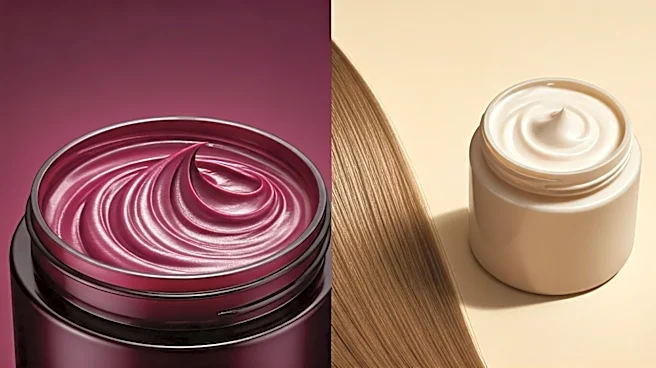
Think of a deep conditioner as your daily rinse-out conditioner’s more powerful sibling. Its primary job is to deliver a potent dose of moisture and improve the surface of your hair. The main goal is to make your hair feel soft, look shiny, and become
easier to detangle. Deep conditioners are formulated with ingredients like fatty alcohols, humectants, and emollients that work to smooth down the hair’s cuticle—the outermost layer of the hair shaft. When the cuticle is flat, your hair reflects more light (making it look shinier) and is less prone to tangling and frizz. Most deep conditioners are designed to be used for about 5 to 10 minutes, offering a quick but effective boost of hydration that’s perfect for hair that’s generally healthy but feels a bit dry or dull.
The Purpose of the Hair Mask
A hair mask, on the other hand, is a true treatment. While it also provides moisture, its main purpose is to repair and strengthen the hair from the inside out. Masks are formulated with smaller molecules and more concentrated ingredients—like proteins (keratin, amino acids), vitamins, and nourishing oils—that are designed to penetrate deeper into the hair’s cortex. This is the part of the hair responsible for its strength and elasticity. If your hair is damaged from coloring, heat styling, or chemical treatments, a mask is what you need to help rebuild its internal structure. Because they are so intensive, masks often require more time to work their magic, typically needing to be left on for 20 minutes to an hour (or even overnight, for some formulas).
The Key Difference: Smoothing vs. Rebuilding
Here’s the simplest way to think about it: A deep conditioner primarily works on the outside of the hair, while a hair mask works on the inside. A deep conditioner is like applying a rich, luxurious body lotion—it hydrates and smooths the surface for an immediate soft, silky feel. A hair mask is more like a targeted vitamin supplement or a prescription-strength serum—it delivers potent, active ingredients deep down to fix an underlying problem. The former addresses symptoms like dryness and frizz; the latter addresses the root cause, like weakness and breakage. This distinction is why their ingredients, application times, and recommended frequencies are so different.
How to Choose and When to Use Them
Your hair’s condition is your best guide. If your hair is generally healthy but gets frizzy or feels a bit parched, a weekly deep conditioning session for about 10 minutes will likely restore its softness and shine. But if your hair is brittle, snapping easily, or looks fried from bleach or flat irons, you need a repairing mask. Use a mask once or twice a month to start, as overuse of protein-rich formulas can sometimes lead to stiffness. A good rule of thumb is to apply these treatments to clean, damp (not sopping wet) hair, as this allows for better product absorption. And always focus the product on your mid-lengths and ends, where hair is the oldest and most in need of attention.
Can You Use Both?
Yes, but strategically. You don't need to use them in the same wash session. A good routine might involve using a deep conditioner one week and a hair mask the next, alternating based on your hair's needs. If your hair is severely damaged, you might use a repairing mask weekly until you see improvement, then switch to a deep conditioner for maintenance. The confusion in the marketplace is real, as many brands use the terms interchangeably. The best way to cut through the noise is to ignore the marketing name on the front and instead read the ingredient list and product description on the back. Look for words like “moisturizing” and “mooothing” for a conditioner, and “repairing,” “strengthening,” or “rebuilding” for a mask.