
The Candace Parker Blueprint
To understand Candace Parker’s impact, you have to look past the already-impressive numbers. A two-time MVP, two-time Olympic gold medalist, and three-time WNBA champion, her greatness is undisputed. But
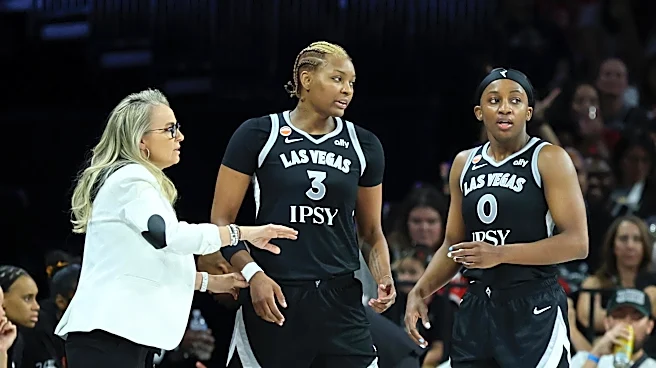
her true genius lies in her portability. She didn’t just win; she arrived at different franchises—the Los Angeles Sparks, the Chicago Sky, and the Las Vegas Aces—and provided the final, intangible ingredient for a championship. For the Sparks, it was the culmination of a long journey to the top. In Chicago, it was a homecoming that delivered a title against the odds. In Las Vegas, she was the steadying veteran presence that pushed a talented roster over the finish line. Parker’s gift was never just about her versatile game; it was about her high basketball IQ, her poise under pressure, and her ability to elevate her teammates. She was, in effect, a coach on the floor who could also drop 20 points when needed.
From Hardwood to Pitch
Translating that kind of singular influence to a soccer pitch seems, at first, more difficult. The field is larger, the action is more diffuse, and one player among eleven has fewer opportunities to dictate play with the ball at their feet. Yet, veteran leadership might be even more crucial in soccer precisely because of this. While a basketball point guard can control the tempo with every possession, a soccer leader must do it through constant communication, positioning, and an almost telepathic understanding of the game’s flow. Where physical speed may decline with age, mental quickness and tactical awareness often reach their peak. These on-field generals don't need to be the fastest player on the pitch; they just need to be three steps ahead in their mind.
Soccer's On-Field Generals
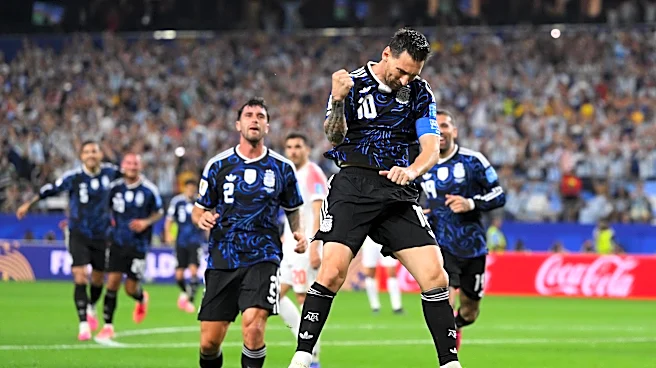
Look no further than Luka Modrić and Lionel Messi for proof. Modrić, well into his 30s, remained the heartbeat of both Real Madrid and the Croatian national team. His ability to manage the tempo, escape pressure, and deliver the perfect pass became legendary, culminating in a Ballon d'Or in 2018 and leading Croatia to a World Cup final and a third-place finish. Similarly, Lionel Messi’s evolution is a masterclass in veteran leadership. The quiet genius of his youth transformed into a vocal, defiant captain for Argentina. He no longer led by talent alone, but with presence and radical trust that inspired his teammates to finally capture the elusive World Cup in 2022. Both players adapted their games, compensating for any loss of explosive pace with an unparalleled understanding of space and time.
More Than Just On-Field Coaching
The impact of a veteran leader extends far beyond the 90 minutes of a match or the 48 minutes of a basketball game. It’s in the locker room, on the training ground, and in front of the media. These players become mentors, guiding younger, explosive talents and teaching them how to be professionals. They act as a bridge between the coaching staff and the rest of the team, ensuring the tactical plan is understood and executed. They absorb pressure, speaking to the press after a tough loss to shield younger players or setting a tone of calm before a massive final. This off-field presence is what builds a winning culture—a shared belief that turns a collection of talented individuals into a true team. They instill a discipline that persists even when motivation fades.