






The Body as a Storytelling Clock
Fantasy stories, especially those spanning generations, often struggle with the passage of time. We get title cards reading “Ten Years Later,” new actors for old characters, and exposition-heavy dialogue to catch us up. It’s a necessary but often clunky
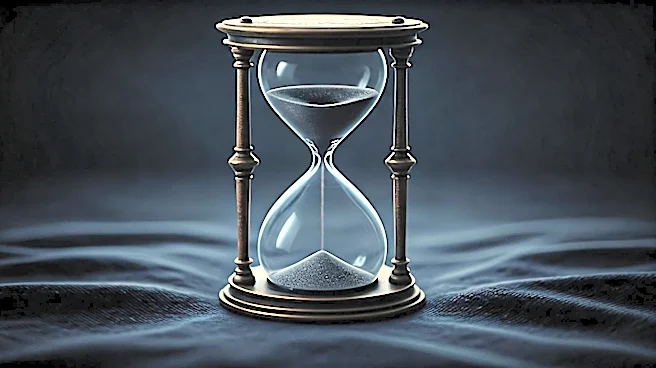
tool. The genius of Viserys’s arc is that his body becomes the story’s clock. We don’t just have to be told that a decade has passed; we see it etched on his face, in his missing fingers, and in the way he carries his increasingly frail frame. His illness, a form of gruesome leprosy, is a physical manifestation of time’s brutal march. Each time jump feels earned because we witness its cost. The fresh-faced, if stressed, king from the premiere becomes a gaunt, skeletal figure held together by willpower and milk of the poppy. This visual continuity provides a powerful anchor for the audience. While other characters age, scheme, and have children, Viserys’s slow-motion collapse is the constant, grim metronome against which all other changes are measured.
Externalizing a Kingdom's Rot
Effective fantasy writing uses metaphor to make grand ideas feel personal. Viserys’s physical decay is a perfect externalization of the sickness festering within his own family and kingdom. He is a fundamentally decent man who makes a series of well-intentioned but weak decisions to appease those around him. He fails to cut out the political cancers—the ambitions of his brother, the plotting of his Hand, the bitter rivalry between his wife and daughter—and so his own body begins to rot from within.
Every festering sore and lost appendage mirrors a political compromise that weakens the Targaryen dynasty. He literally falls apart as his house divides. While he presides over a time of apparent peace and prosperity, the audience can see the truth in his wasting form. The kingdom isn't at peace; it's in remission. The vultures are circling, waiting for the king’s body to finally give out so they can tear the realm, and each other, to pieces. His illness makes the show’s central theme of internal decay visceral and unavoidable.
Strength Forged in Weakness
A lesser show would have depicted Viserys’s decline as simply pathetic. He could have been a weak, forgettable king who faded into irrelevance. Instead, his physical suffering becomes the crucible that forges his most powerful moments. His story isn’t about a man losing his strength; it’s about a man finding it when he has nothing left.
This culminates in one of modern television’s most unforgettable scenes: his final, agonizing walk to the Iron Throne. Stripped of his golden mask and propped up by a cane, every step is an act of supreme will, driven by the desperate need to protect his daughter Rhaenyra’s claim. In that moment, he is physically at his weakest but morally at his strongest. He isn’t just a decaying king; he is a father fighting through the fog of pain and death itself to do the one thing he believes is right. This redefines his entire journey. The suffering wasn’t just a sad spectacle; it was the necessary path to his final, heroic act of love and duty.