


The Character Reveal
Often, a costume choice is the fastest way to understand a character's inner life. It's a visual shortcut to their aspirations, insecurities, or how they see themselves versus how the world sees them. In "Friends," Ross’s baffling "Spud-nik" costume is a perfect
example. It’s a clumsy, intellectual pun that no one understands, perfectly encapsulating his tendency to overthink things to the point of social absurdity. In contrast, Chandler’s pink bunny suit, forced on him by Monica, visually represents his feeling of emasculation in the relationship. Over in "The Office," in the episode "Costume Contest," Oscar dresses as a "rational consumer," a choice that flies over everyone's heads but screams volumes about how he views himself as intellectually superior to his more frivolous colleagues. These choices aren't just for a quick laugh; they're character statements worn on their sleeves.
Becoming the Mask
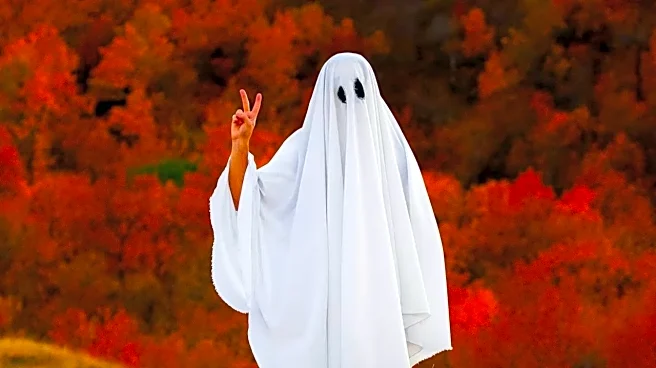
Sometimes, the premise is more literal. The most iconic example of this trope comes from "Buffy the Vampire Slayer." In the season two episode appropriately titled "Halloween," a magical spell causes the residents of Sunnydale to transform into whatever they are wearing for the night. Buffy, who chose a prim 18th-century noblewoman's gown to impress Angel, becomes a helpless damsel. Xander, who bought a toy gun, becomes a hardened army soldier, and Willow, dressed as a ghost, becomes an actual ghost, able to walk through walls but unable to interact with the world. The episode brilliantly uses this supernatural premise to strip the characters of their usual strengths and force them to rely on different skills, revealing their core identities in the process. It explores themes of identity and perception by literally making its characters confront the masks they've chosen.
The Ultimate Disguise
In other shows, costumes are less about revealing truths and more about concealing them, often as a critical tool in a larger scheme. No series has made this more of an art form than "Brooklyn Nine-Nine" with its annual Halloween Heists. In these episodes, costumes are essential components of elaborate cons designed to outsmart fellow detectives. From dressing a team in the red robes and white bonnets of "The Handmaid's Tale" to create a diversion, to using body doubles in identical outfits, the disguises are central to the plot's mechanics. The costume isn't just what a character wears to the party; it's a strategic asset. The heist episodes demonstrate how a good disguise can be the key to misdirection, allowing characters to hide in plain sight or manipulate their rivals' expectations to secure a win.
A Recipe for Chaos
Then there are the episodes where costumes are simply the catalyst for pure, unadulterated chaos. In "Community's" zombie-themed episode, "Epidemiology," a mysterious substance served at the Greendale Halloween party turns students into zombies, creating an outbreak that the main characters must survive. Their costumes become hilariously ironic armor in the fight; Troy's sexy Dracula, Abed's xenomorph, and Shirley's Miss Piggy become part of a surreal, high-stakes battle set to the soundtrack of ABBA. Here, the costumes add a layer of absurdity to the horror, creating a memorable mashup of genres. The plot isn't about what the costumes mean, but about the visual spectacle and comedic friction they create when thrown into a completely unexpected and dangerous situation.