





Stop Looking for 'The Best' Overall
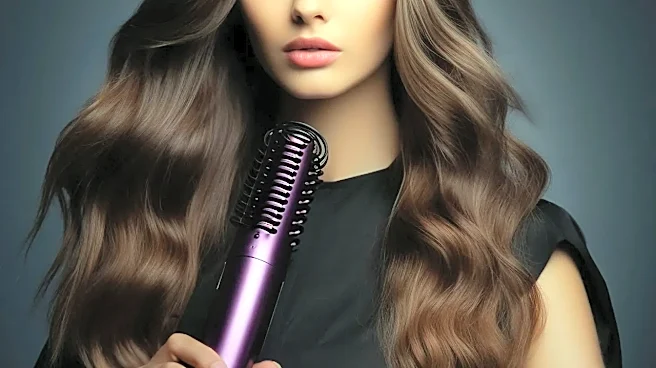
The biggest trap in any buyer's guide is the idea of a single 'best' tool. There is no such thing. The only thing that matters is finding the best tool for your hair. A guide's top pick might be a high-heat titanium wand that works wonders on coarse,
thick hair but would be incredibly damaging to someone with fine, color-treated strands. Instead of blindly trusting a number one ranking, treat these guides like a catalog of options. Use them to learn about new brands and features, but ignore the final verdict. The real winner is the wand that suits your hair type, length, and styling goals, not the one that won a magazine's popularity contest.
Material Isn't a Buzzword, It's Everything
Guides often throw around terms like ceramic, titanium, and tourmaline without much explanation, but the material of your curling wand is arguably its most important feature. Here’s a simple breakdown: Ceramic is the gentle giant, known for its even heat distribution, which makes it the safest choice for fine, damaged, or color-treated hair. Titanium is the powerhouse; it heats up incredibly fast and maintains high temperatures, making it ideal for thick, coarse, or hard-to-curl hair. Tourmaline is a valuable addition you'll often see combined with either ceramic or titanium. It's a crushed mineral that, when heated, releases negative ions to fight frizz and boost shine, making it great for anyone battling unruliness. Choosing the right material for your hair type is the difference between a great hair day and potential heat damage.
Barrel Size Determines the Wave, Not Just the Curl
Many people think smaller barrels are for tight curls and larger barrels are for loose ones, and while that’s true, it’s an oversimplification. Your hair length is a huge factor. A 1-inch barrel, often called the most versatile size, will create a defined wave on long hair but a bouncy curl on short, bob-length hair. If you have long hair and want loose, beachy waves, you’ll need a larger barrel, like a 1.25-inch or 1.5-inch. Using a small barrel on long hair expecting loose waves will only result in tight, poodle-like ringlets that take forever to style. Conversely, trying to use a huge 2-inch barrel on short hair will just give you a slight bend and a lot of frustration. Match the barrel to your hair length first, then to your desired style.
The Myth of 'Hotter Is Better'
A common mistake is assuming a curling wand needs to be scorching hot to be effective. This leads people to buy cheap wands with only one or two high-heat settings, which is a recipe for disaster for most hair types. Fine, fragile, or color-treated hair should stay in the lower range (below 350°F), while thick or coarse hair might need higher temperatures (350-420°F) to hold a style. An essential feature that many basic buyer's guides overlook is adjustable temperature control. This allows you to find the 'Goldilocks' temperature for your hair—hot enough to set a curl effectively but not so hot that it causes damage. Always start at a lower temperature and only increase it if your curls aren't holding.
Learn to Spot the Hidden 'Spon-Con'
Finally, a critical part of reading any buyer's guide in the modern era is understanding the economics behind it. Many 'Best Of' lists are riddled with affiliate links, meaning the publication gets a cut if you buy through their link. While not inherently bad, this can incentivize placing products with higher commission rates or from partner brands at the top of the list. Look for disclosures like 'we may earn a commission' and be slightly more skeptical of those rankings. Pay more attention to the 'why'—the detailed descriptions of a wand's features—than the 'what'—its numerical rank. The most reliable information often comes from detailed product breakdowns rather than simple, ranked lists.