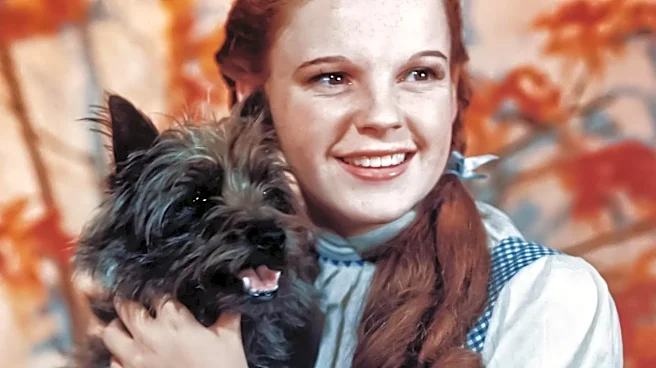

The Yellow Brick Road Was Brutal, But She Stayed On It
Let’s clear this up first: Judy Garland did not walk off the set of The Wizard of Oz. While it is indisputably her most famous film, the idea of a 16-year-old contract player defying the all-powerful MGM
studio in 1938 is pure fantasy. The reality for Garland was far harsher. She was subjected to a punishing work schedule, a studio-enforced diet of soup and cigarettes, and a regimen of amphetamines to keep her working and sleeping pills to make her stop. Her ex-husband Sid Luft later alleged that she also endured harassment from some of the actors playing the Munchkins. The set of Oz was a place of immense pressure and abuse for its young star, but she saw the production through to the end. The walkouts, and the firings that followed, would come later.
The Real Story: Annie Get Your Gun
The film the headline is likely referencing, albeit incorrectly, is 1950's Annie Get Your Gun. This was the production where Garland’s struggles with the studio system came to a dramatic head. Cast as Annie Oakley in what was expected to be another massive MGM musical, Garland was by this point physically and emotionally exhausted from over a decade of relentless work and addiction. She clashed with the initial director, Busby Berkeley, who was notoriously harsh. Even after he was replaced, Garland’s condition didn't improve. She would show up to the set hours late, or not at all, suffering from migraines and severe insecurity. After a month of chaotic filming and multiple warnings, MGM took the unprecedented step of firing its biggest star. Garland was devastated, telling the press she was forced out and subsequently checking into a hospital to recover. Betty Hutton was brought in to replace her, and the film became a hit.
A Pattern of Dismissal
The Annie Get Your Gun incident wasn't an isolated one. It marked the beginning of the end of her long, fruitful, and fraught relationship with MGM. The studio officially released her from her 15-year contract in September 1950 after she failed to report for work on the film Royal Wedding. Years later, history repeated itself. In 1967, Garland was cast as the tough, aging Broadway star Helen Lawson in the film adaptation of Valley of the Dolls. The role was a thrilling, against-type opportunity. However, her old demons resurfaced. After about a month of pre-production work, during which her behavior was reportedly erratic, she was fired from the film and replaced by Susan Hayward. Some reports claim Garland kept the sequined pantsuit designed for her character and wore it in concert appearances, a defiant and poignant symbol of what could have been.