





Nigeria's 2018 'Naija' Masterpiece
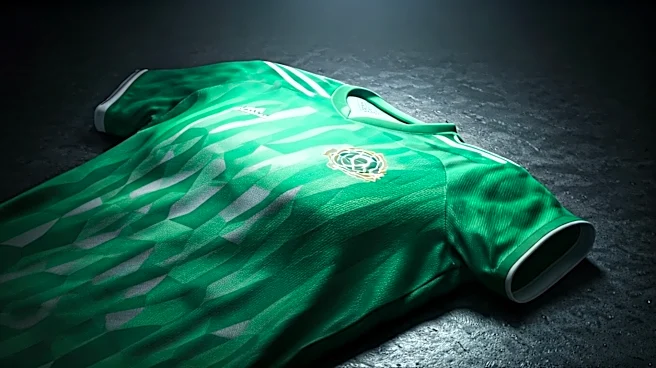
In the social media age, a kit needs to do more than just identify a team. It needs to be an event. Nike and Nigeria understood the assignment in 2018, creating a jersey that wasn't just a uniform but a cultural phenomenon. The 'Naija' kit, with its electrifying
green-and-white feathered pattern on the torso and black-and-white sleeves, was a vibrant homage to the team's 1994 debut strip. But its appeal went far beyond nostalgia. It became a global fashion statement, selling out in minutes after three million pre-orders. It was worn by hypebeasts in London and Lagos, appeared in music videos, and proved that a national team's jersey could be the hottest piece of apparel on the planet.
Roberto Baggio's Divine Ponytail & Diadora (1994)
The 1994 World Cup in the USA was a riot of sun-bleached color and questionable denim, but one look stood above it all: Roberto Baggio. It wasn't just his sublime skill but his entire aesthetic. The wispy, almost spiritual ponytail—the 'Divin Codino'—became his trademark, a symbol of flair and non-conformity. Paired with Italy's impossibly cool Diadora kit, a brilliant azure blue with a subtle watermark and a classic polo collar, Baggio looked less like a soccer player and more like a Renaissance artist sent to the future. Even in the crushing moment of his final penalty miss, the image was indelible: a tragic hero whose style perfectly captured the beauty and heartbreak of the game.
West Germany's Geometric Triumph (1990)
Some kits are beautiful, some are bold, but few are as iconic as the jersey West Germany wore to lift the trophy at Italia '90. Designed by Adidas, it was a masterpiece of geometric modernism. Against a clean white base, a jagged, dynamic ribbon of black, red, and gold—the colors of the German flag—slashed across the chest. It was angular, confident, and utterly unique. The design felt like the future, capturing the forward-moving energy of a nation on the brink of reunification. It has since become the visual shorthand for late Cold War cool and a benchmark against which all other 'graphic' jerseys are measured. It wasn't just a shirt; it was a piece of design history.
Johan Cruyff's Two-Stripe Rebellion (1974)
The most powerful style statements are often the quietest. In the 1974 final, the Dutch team, outfitted by Adidas, took the field in their famous orange kits featuring the brand's signature three stripes down the sleeves. All except one player. Johan Cruyff, the team's transcendent star, had a personal sponsorship deal with Puma. In a legendary power play, he refused to wear his rival's branding. The solution? The Dutch federation had a special jersey made for him—identical to his teammates' in every way, except his sleeves had only two stripes. It was a subtle but profound act of individual branding before that was even a concept, cementing Cruyff's status as a rebel genius who played by his own rules, both on and off the ball.
Croatia's Enduring Checkers
Few national teams have an identity as instantly recognizable as Croatia's. The red-and-white checkerboard pattern, or 'šahovnica,' is drawn directly from the country's coat of arms and has been a fixture since the nation's first forays onto the international stage in the 1990s. While the execution has varied over the years—from the classic block pattern of the '98 bronze medalists to the pixelated-style 'Vatreni' design of the 2018 finalists—the core look is constant. It's more than just a pattern; it's a bold, unambiguous declaration of national pride and identity. In a sea of solid colors and template designs, Croatia's checkerboard is a permanent and powerful statement.
The Glorious Chaos of Jorge Campos (1994)
While Baggio represented effortless Italian elegance, Mexico's goalkeeper Jorge Campos offered the opposite: pure, unadulterated, neon-drenched joy. The diminutive, acrobatic keeper was famous for his high-risk style, often playing as a 'sweeper-keeper' and even a forward. His self-designed kits reflected his personality perfectly. They were a chaotic explosion of fluorescent pink, highlighter yellow, and electric green, in baggy, '90s-surfer silhouettes he designed himself. They were loud, they were garish, and they were absolutely brilliant. In a tournament defined by tight defenses, Campos and his wardrobe were a reminder that soccer is supposed to be fun, flamboyant, and never, ever boring.