


The Unwritten Social Contract
First, you have to understand the playground. Burning Man isn't just a free-for-all; it operates on ten core principles that create a unique social fabric. For performers, principles like 'Participation,' 'Radical Self-Expression,' and 'Gifting' are essential.
'Participation' means the audience is expected to engage, not just spectate. 'Gifting' means performances are offered freely, without expectation of payment, which reframes the artist-audience relationship away from a transaction and toward a shared experience. This pre-existing ethos does some of the heavy lifting. Participants arrive already primed to interact and contribute, knowing they are part of the show. Performers aren't trying to convince a passive crowd to get involved; they're channeling an energy that's already there.
Designing the 'Magic Circle'
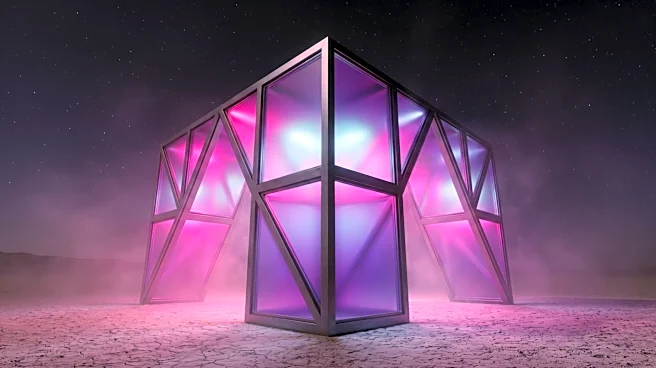
Controlling the experience isn't about building walls, but about creating what's known as a 'magic circle'—a temporary, consensual space where the rules of the performance are clear. This doesn't happen by accident. Artists design their installations and performances with intuitive boundaries and instructions. For example, the 'Shrumen Lumen' mushroom installation used pressure-sensitive pads at the base. When people stood on them, the mushrooms changed color and shape. The interaction was clear: your presence here creates this effect over there. This is a brilliant way to guide participation. It gives the public a specific role without handing over the keys to the entire project. The performance becomes a collaborative game where the artist has already designed the board, the pieces, and the rules for how they can move.
The Art of the Invitation
The most successful interactive art doesn't demand participation; it invites it. A performance might have a clear start and end point, but with porous boundaries that allow people to drift in and out. Think of it less like a stage play and more like a human-powered machine. An artist might build a massive, four-person teeter-totter that triggers lights and sounds. The invitation is obvious and playful. You don't need a sign that says, 'Please use this.' The function is embedded in the form. This approach empowers participants by giving them agency within a structured system. The artist controls the machine's design and its potential outputs, but the audience's energy and choices create the final, unique result in that specific moment.
Embracing 'Yes, And...' Thinking
In the unpredictable environment of the Black Rock Desert, things will inevitably go sideways. An artist might design a piece to be interacted with in one way, only to find participants have invented a new, unforeseen use for it. Inexperienced performers might see this as a loss of control. Veteran performers see it as a gift. This is the 'Yes, And…' principle of improv comedy applied to large-scale art. Rather than shutting down unexpected behavior (unless it's unsafe), seasoned artists often incorporate it. They observe how people are naturally engaging and adapt the piece in real-time or for future iterations. The art becomes a living thing, co-created by the artist's initial vision and the community's response. The goal shifts from preserving a static idea to facilitating a dynamic process.
Building for Resilience, Not Perfection
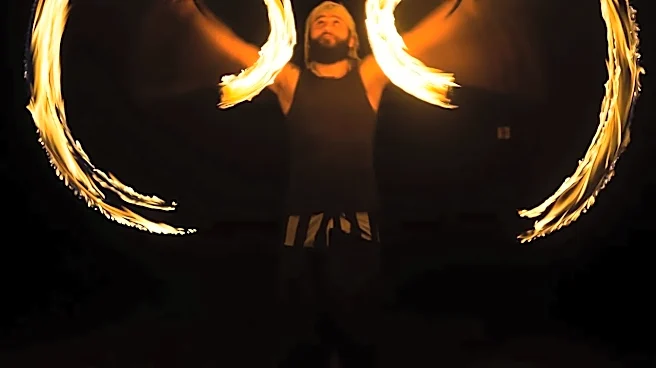
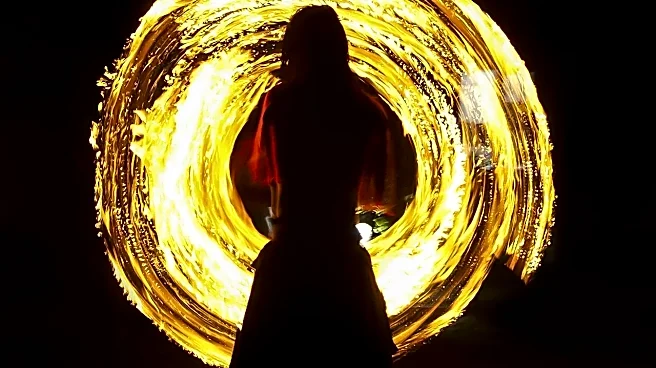
Ultimately, performers at Burning Man know that they are building for one of the harshest environments imaginable—both physically and socially. Art is subjected to extreme weather and even more extreme enthusiasm. As artist Ron Simmer notes, an installation can be attacked by large numbers of excited users in unthought-of ways. Because of this, control is often found in engineering and foresight. Pieces are built to be durable, and safety perimeters are established for fire or kinetic art. Fire performers, for instance, are required to have a sober 'safety' spotter and proper fire suppression gear on hand. This is the most practical form of control: anticipating failure points and building in redundancy and safety protocols. It's an admission that you can't control people, but you can control the resilience of your system.