




The Thankless Job
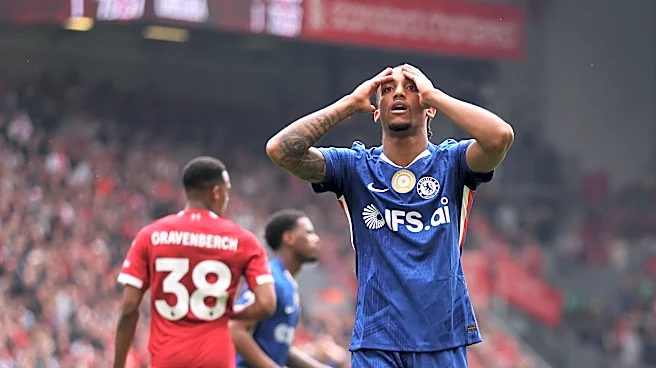
Being a top-level defender is one of the most psychologically taxing jobs in sports. A striker can miss nine chances, scuffing shots and misjudging headers, but if they score the tenth, they are the hero. Their job is a constant exercise in opportunity. A goalkeeper can make a string of world-class saves, but one slip is all anyone will remember. Theirs is a role of singular, high-stakes moments. But the defender lives in a uniquely cruel middle ground. For 89 minutes, a defender can be perfect. They can execute every slide tackle flawlessly, win every aerial duel, and distribute the ball with the precision of a midfielder. They are the foundation upon which victory is built. But their work is often invisible, a quiet accumulation of prevented
disasters. It doesn’t show up on highlight reels unless it’s a last-ditch, goal-line clearance. The problem is, a single misstep—a heavy touch, a slip on the grass, a moment of miscommunication—can erase all of it. One bad moment, and the invisible work becomes glaringly, catastrophically visible.
The Knockout Tournament Multiplier
This pressure is amplified a hundredfold in a knockout tournament. A 38-game league season is built for regression to the mean. A bad day, a costly error, or an unlucky bounce can be absorbed over time. The best team usually, eventually, wins. But a single-elimination tournament like the World Cup or the Champions League knockout stage is a different beast entirely. It’s not a test of who is best over the long haul; it's a test of who can avoid a fatal mistake under immense pressure.
In this format, there is no tomorrow. A 1-0 loss is the end of the road. Years of preparation, national hope, and personal ambition can be extinguished in a single second. And more often than not, that second belongs to a defender. A striker’s missed chance is a story of what could have been. A defender’s error is the story of what tragically *is*. The entire structure of tournament football places an outsized weight on the shoulders of the back line, turning them into the unwilling arbiters of their team’s destiny.
A Moment of Infamy
Perhaps no story illustrates this brutal reality more tragically than that of Andrés Escobar. At the 1994 FIFA World Cup, the Colombian defender, nicknamed “The Gentleman” for his clean play and calm demeanor, inadvertently deflected a cross into his own net in a crucial group stage match against the host nation, the United States. Colombia, a tournament dark horse, went on to lose 2-1 and was eliminated. It was a simple, unfortunate mistake—the kind that happens in soccer. But the context was devastating. Just ten days later, back home in Medellín, Escobar was shot and killed. While his murder was complexly tied to Colombia’s turbulent social climate and gambling syndicates, the act was forever linked in the public mind to that one moment on the pitch. His story became the ultimate, horrifying symbol of the unbearable weight a single defensive error can carry.
Echoes in the Modern Game
While Escobar's fate is an extreme outlier, the principle echoes through the sport. Think of John Stones’s calamitous error for England against the Netherlands in the 2019 UEFA Nations League semi-final. After attempting a risky turn deep in his own half, he was dispossessed, leading directly to a Dutch goal in extra time that sealed England’s exit. In an instant, his composed performance was forgotten, replaced by the narrative of a fatal lapse in judgment.
Similarly, Liverpool goalkeeper Loris Karius’s two monumental errors in the 2018 Champions League final against Real Madrid effectively cost his team the trophy. A concussion was later revealed to be a mitigating factor, but the damage to his career and reputation was immediate and severe. These aren't villains; they are highly skilled athletes operating at the absolute limit of human performance, where the margin between perfection and catastrophe is thinner than a blade of grass.