






Decoding the Ocean's Message
When we talk about the ocean’s “hand gestures,” we’re not being poetic. We’re talking about observable, planet-altering shifts in its vast circulatory systems. The most critical of these is the Atlantic Meridional Overturning Circulation (AMOC), a massive
network of currents often called the “great ocean conveyor belt.” Think of it as the planet's circulatory system. It pulls warm, salty water from the tropics up to the North Atlantic, where it releases heat that helps keep Europe and North America temperate. As the water cools and gets denser, it sinks deep into the abyss and travels back south, completing a loop that regulates global climate patterns. For centuries, this system has been a reliable engine of climate stability. Now, however, it's showing signs of losing that stability.
The Wobbling Conveyor Belt
The central problem is that the conveyor belt is slowing down. Scientists have observed a weakening of roughly 15% since the mid-20th century. The primary culprit is climate change. As global temperatures rise, the Greenland ice sheet melts at an accelerated rate, pouring huge amounts of cold, fresh water into the North Atlantic. This influx acts like a brake. Because freshwater is less dense than saltwater, it doesn't sink as readily, disrupting the engine that drives the entire circulation. This isn’t a far-off, theoretical problem. An unusual and persistent “cold blob” of water has appeared in the ocean south of Greenland, which some scientists believe is a direct symptom of this slowdown—a sign that less warm water is making it that far north.
More Than Just a Little Water
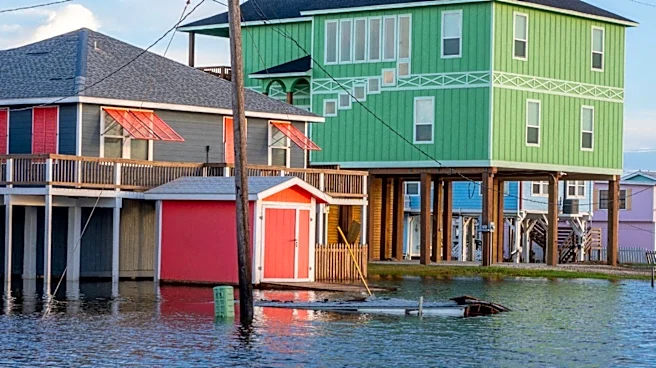
A weaker AMOC has consequences that stretch far beyond a chilly patch of ocean. For the United States, one of the most direct impacts is accelerated sea-level rise along the East Coast. A temporary slowdown in 2009-2010 was linked to a sudden 5-inch sea-level spike along the New York coastline. A long-term weakening could make coastal flooding far more severe and frequent. It also affects weather patterns, potentially leading to more extreme storms and shifting rainfall, and impacts marine ecosystems that rely on the currents for nutrient distribution. For Europe, the effects could be even more dramatic, with some models predicting significantly colder winters as the flow of tropical heat is reduced.
The Paradox of Adaptation
This brings us to the core of the adaptation problem. It’s not just that the effects are bad; it’s that they are profoundly uncertain. Scientists are concerned the AMOC could reach a “tipping point,” where it abruptly collapses into a much weaker state. The timing of this is hotly debated—some studies suggest it could happen this century, while others see it as a lower-probability event. This uncertainty is a nightmare for planners. How do you build coastal defenses when you don't know if you need to plan for one foot of sea-level rise or a sudden, dynamic surge of several feet? We are not just adapting to a steady, linear change. We are facing a system that could shift into a new, unstable state with little warning, making many of our current adaptation strategies obsolete before they’re even implemented. The challenge is preparing for deep uncertainty itself.