
The Myth: A Primetime Reunion Special
The common critique of any 'Honors' or tribute event is that it serves as a high-production-value reunion tour. We see the icons, hear the opening bars of a track that defined a decade, and we’re instantly transported. The aesthetics are often rooted
in the past—the fashion, the slang, the larger-than-life energy of hip-hop's golden age. Critics frame these nights as exercises in sentimentality, a chance for Gen X and older millennials to remember when beats were boom-bap and lyrics were everything. In this view, the show is a relic celebrating other relics, a polished monument to a time gone by. It’s seen as a closed loop, celebrating a past that has little to say to the artists topping today's charts.
The Reality: A Blueprint in the Present Tense
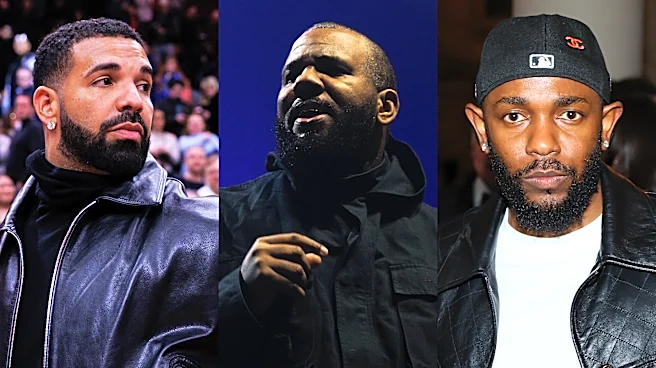
The truth is, these events aren't about the past; they're about the present. When an artist like Missy Elliott or A Tribe Called Quest is honored, the celebration isn't just about their classic albums. It's about recognizing a sonic and stylistic DNA that is actively running through contemporary music. You can't listen to the inventive flows of artists like Doja Cat or Tierra Whack without hearing the echoes of Missy's playful genius. You can't see the jazz-infused, conscious lyricism in Kendrick Lamar's work without acknowledging the path forged by Q-Tip and Phife Dawg. The honorees aren't ghosts of hip-hop past. They are the architects whose blueprints are still being used to build the genre's most exciting new structures. The honor isn't a gold watch for a job well done; it's an acknowledgment of a job that never ended.
The Reality: The Guest List Is the Tell
The most compelling evidence against the nostalgia myth is the performance roster. Tributes at these shows are rarely performed by the honorees' direct contemporaries. Instead, producers deliberately curate a lineup of today's stars to reinterpret the classic material. When a current trap artist performs a Public Enemy anthem, or a modern R&B crooner tackles a Lauryn Hill ballad, it’s not just a cover—it’s a conversation. It’s a moment that explicitly connects the foundational to the fashionable. These performances demonstrate, in real time, how a 30-year-old song can be infused with modern swagger and still resonate. It proves the influence isn't passive. It’s an active, adaptable force that crosses generational divides, creating a bridge between the pioneers and their musical descendants.
The Reality: A Masterclass, Not Just a Memory
Ultimately, to see Hip Hop Honors or similar awards as pure nostalgia is to fundamentally misunderstand the culture. Hip-hop has always been about building on what came before—sampling, flipping, and reinventing. These shows are a televised embodiment of that core principle. They are a masterclass in legacy. They teach a new generation of fans not just what was great, but why it was great, and how that greatness persists. Seeing Lil' Kim command a stage with an orchestra, as she recently announced for her 'Hard Core Symphony' show, isn't about remembering 1996; it’s about experiencing the timelessness of her impact in a new frame. These events aren’t about looking back. They're about understanding the through-line that connects the park jams in the Bronx to a global, multi-billion-dollar culture. They show that influence, when it’s this powerful, is always in motion.