

Myth: A Precise Winged Eyeliner Was Universal
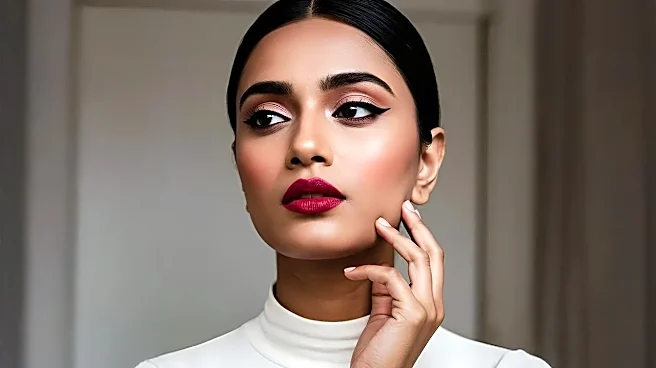
Today's 'Old Hollywood' tutorial almost always starts with a sharp, graphic winged eyeliner, extending dramatically from the outer corner of the eye. This look is considered the absolute hallmark of mid-century glamour. We associate it with everyone from Audrey
Hepburn to Marilyn Monroe, a one-size-fits-all symbol of vintage elegance. But this modern interpretation simplifies a much more varied and technically-driven reality. The truth is, while liner was crucial, the dramatic 'cat-eye' as we know it today was not the universal standard, but rather an element that gained popularity later in the era and has been exaggerated since. For much of the Golden Age, eyeliner's job was corrective and adaptive. Makeup artists like Max Factor—who literally invented the term 'make-up'—used liner to reshape eyes for the camera. This could mean a soft, smudgy line to add depth, a line inside the waterline to make eyes look smaller and more intense, or a line that created the illusion of a different shape entirely. For black-and-white film, some stars even used unconventional products like a mix of petroleum jelly and charcoal to define their eyes. The crisp, flicked-out wing became more prominent in the 1950s, but the softer, more shape-defining liner was the real workhorse of the studio era.
Myth: They Used Heavy, Kardashian-Style Contouring
When we hear 'contouring' today, we picture the sculpted, bronzed, and blended look popularized by celebrities like Kim Kardashian. It's easy to assume that the chiseled cheekbones of stars like Grace Kelly were achieved with similar methods. While Old Hollywood makeup artists were pioneers of contouring, their techniques were born from necessity and were vastly different. Their goal wasn't a sun-kissed glow, but facial remodeling for the harsh realities of early film technology. On primitive black-and-white film, for example, the wrong makeup could make skin look dirty or blotchy. With the advent of Technicolor in the late 1930s, a new problem arose: hot studio lights would reflect off the standard greasepaint, causing an actor's face to pick up surrounding colors, making them look bizarrely red or blue. Max Factor's groundbreaking 'Pan-Cake' makeup, developed specifically for Technicolor, solved this with a matte finish that evened out the complexion under intense lighting. Contouring was done with blush or subtle shading to create structure that the camera would pick up, not to bronze the skin. Grace Kelly famously used two shades of blush—a lighter shade on the apples of her cheeks and a darker one just below to create definition. It was about creating shadows and highlights for the camera, a far cry from the blended, multi-product routines of today.
Myth: The 'Perfect' Red Lip Was a Single Look
The classic red lip is arguably the most enduring symbol of Old Hollywood. We imagine a universal, perfectly-applied crimson pout on every starlet. The reality was much more customized and technically complex. A star's lip shape was a key part of her on-screen persona and was often completely fabricated by makeup artists. Actresses like Vivien Leigh, who felt her bottom lip was too thin, had it overdrawn with liner to create a fuller look. Marilyn Monroe's iconic full lips were an illusion created by applying up to five different shades of red lipstick and gloss to create dimension and fullness. Joan Crawford’s famous “smear” was a deliberately overdrawn upper lip that became her signature. Furthermore, the color itself was a science. For black-and-white film, certain shades of red would appear black, so makeup artists had to choose their colors carefully. The arrival of smear-proof lipstick in the 1940s was a major innovation, but the idea of one perfect red for everyone simply didn't exist. Each lip was a custom creation designed for a specific face and a specific film technology.
Myth: There Was One Timeless 'Old Hollywood' Style
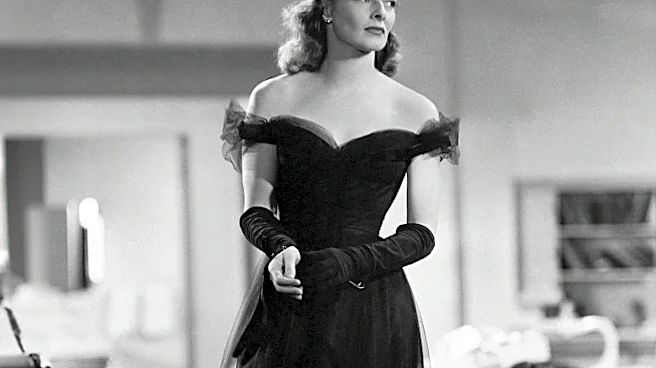
Perhaps the biggest misreading of all is lumping decades of evolving trends into a single, static 'Old Hollywood' look. The style of the 1930s was vastly different from that of the 1950s. The 1930s, influenced by stars like Greta Garbo and Jean Harlow, featured pencil-thin, often rounded eyebrows, and a softer 'rosebud' lip shape. Eyeshadow was applied in a way that widened the eyes for the camera. By contrast, the 1940s, a wartime era, saw a slightly more natural brow and the iconic, resilient red lip. The 1950s ushered in the era we most often associate with the 'classic' look: a fuller brow, the emerging cat-eye, and a focus on flawless, often heavily powdered skin, a look defined by icons like Audrey Hepburn and Doris Day. The vampy, dramatic makeup of a 1930s star had little in common with the fresh-faced, pink-lipped look popular in the mid-50s. Treating them as the same erases the rich evolution of beauty during cinema's most formative decades.