




The Performance of Individuality
Music festivals have long been arenas for sartorial expression, but in the age of the smartphone, the audience is as much a part of the spectacle as the performers on stage. Getting dressed for an event like Coachella or Bonnaroo isn't just about comfort
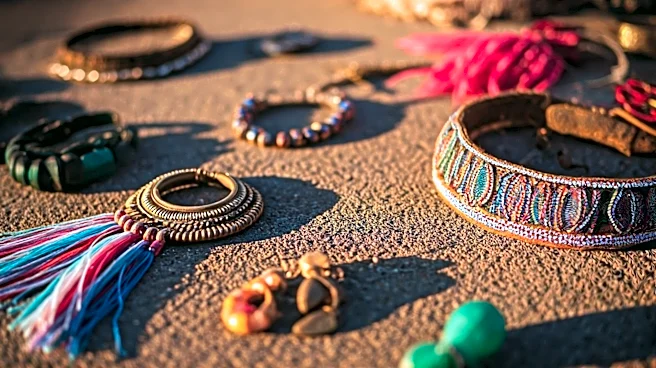
or looking good for your friends; it's about crafting a narrative. Every attendee is potentially the main character of their own weekend story, and their outfit is the costume. This is where the subtle detail becomes currency. In a sea of crochet tops and denim shorts, a uniquely layered necklace, a pair of custom-painted boots, or a vintage jacket passed down from a relative becomes a flag of individuality. It’s a way to say, “I’m participating in this shared culture, but on my own terms.” This initial act of personal styling is the genesis point—an authentic choice made before the algorithm takes notice.
The TikTok-to-Trend Pipeline
The journey from a personal detail to public discourse is now astonishingly fast, thanks to social media. It starts with documentation. A friend posts an Instagram story tagging your unique sunglasses. A creator filming a “festival outfits” montage on TikTok happens to capture your DIY embellished jacket in the background. The algorithm, tuned to detect novelty and engagement, picks it up. Suddenly, a clip with a few dozen views is served to thousands. The comments section becomes the first forum for discourse: “ID on the boots?” “Where can I get that top?” “This is the vibe for the summer.” Platforms like TikTok are designed to isolate and amplify these moments. A single “Get Ready With Me” (GRWM) video can launch a micro-trend if one element—say, a specific way of tying a scarf or a particular brand of face gems—resonates with viewers. This digital amplification turns a single person’s choice into a discoverable, replicable *thing*.
From Detail to ‘Aesthetic’
The internet doesn’t just share details; it categorizes them. Once a few similar stylistic choices gain traction, a larger pattern is identified and, crucially, named. This is how we get the explosion of “aesthetics” and “-cores.” A wave of attendees wearing metallic cowboy boots, fringe, and chrome accessories isn’t just a coincidence; online, it’s quickly dubbed “Cosmic Cowgirl” or “Desert Disco.” The subtle detail is no longer just a boot; it’s a key component of an entire aesthetic identity. This naming process is a form of collective sense-making. It provides a shared vocabulary for fashion fans to discuss, debate, and either adopt or reject the emerging trend. The discourse solidifies: Is this new? Is it derivative? Is it already over? The conversation itself becomes a form of entertainment, playing out in video essays, stitches, and duets across social media.
The Cycle of Commercialization
The final stage of the process is the most predictable: commercialization. Once a detail or aesthetic is trending online, brands are watching. Trend forecasting teams and AI tools scrape social media for these burgeoning conversations. Within days, sometimes hours, fast-fashion retailers have designed, produced, and started marketing their own versions of the viral item. The once-subtle detail—the unique belt buckle or the specific style of mesh top—is now available to millions, advertised in TikTok Shop and Instagram ads. This is often the point where the original architects of the trend feel it has become “cheugy” or overdone. The very thing that made the detail special—its perceived authenticity and scarcity—is erased by its mass production. The discourse shifts again, from excitement and discovery to critiques of consumerism and the rapid, unsustainable pace of the trend cycle, setting the stage for a new search for the next subtle, authentic detail.