



Cementing the Foundation
The first few ceremonies, starting in 2004, were about giving the architects their long-overdue flowers. The show established its credibility by honoring the undeniable pioneers who laid the genre's cornerstones. Honorees like Grandmaster Flash and the Furious
Five, Kool Herc, KRS-One, and Run-DMC were celebrated, ensuring that the roots of the culture—DJing, B-boying, and foundational lyricism—were given prime-time respect. These early shows felt like a corrective, a way of formally canonizing the artists who started a global movement but were often overlooked by mainstream awards. It was a statement that hip-hop history mattered.
The Queens Take the Throne
The show's definition of legacy quickly expanded to ensure the women who shaped the genre were no longer footnotes. MC Lyte was an early honoree in 2006, but the show's 2016 revival after a six-year hiatus, titled 'All Hail the Queens,' was a landmark moment. An entire night was dedicated to Queen Latifah, Missy Elliott, Salt-N-Pepa, and Lil' Kim. The event featured an unforgettable all-female performance of "U.N.I.T.Y." led by Latifah, bringing together generations of women in hip-hop on one stage. It was a powerful acknowledgment that these artists weren't just 'female rappers' but foundational innovators in their own right.
Unforgettable Tribute Performances
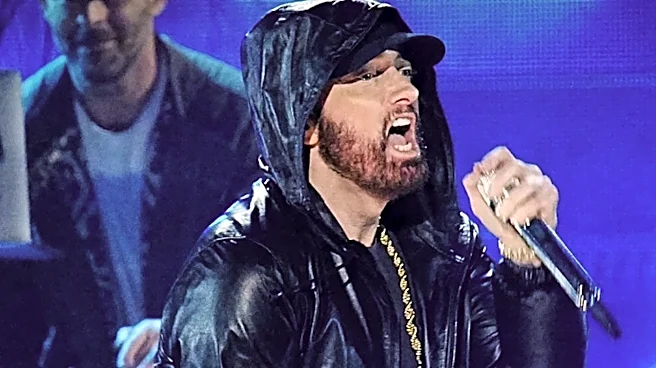
The Honors were legendary for their tribute performances, where modern stars paid homage to their heroes. Eminem's explosive rendition of LL Cool J's "Rock the Bells" with Black Thought and DJ Jazzy Jeff is a fan favorite. Another was Teyana Taylor's show-stopping, high-energy tribute to Lil' Kim, which perfectly captured Kim's fearless stage presence. These weren't just covers; they were heartfelt and meticulously crafted celebrations. The Beastie Boys honoring Run-DMC or Common and Black Thought paying respect to Big Daddy Kane were moments where the genre’s lineage felt tangible, connecting the past to the present in real time.
Expanding the Map Beyond NYC
While early shows focused heavily on New York's golden age pioneers, later editions made a conscious effort to honor hip-hop's regional diversity. The 2007 show, for example, honored A Tribe Called Quest but also Whodini and Teddy Riley, key figures in the New Jack Swing movement. The 2017 ceremony, dubbed 'The 90s Game Changers,' further broadened the scope by honoring Atlanta super-producer Jermaine Dupri and New Orleans mogul Master P. This shift acknowledged that hip-hop's center of gravity had spread, with Southern and West Coast artists creating equally impactful but distinct cultural footprints.
Honoring More Than Just the Music
Perhaps the most significant expansion of 'legacy' was the show’s recognition of figures and forces beyond the microphone. Russell Simmons was honored in 2006 for his entrepreneurial work that helped commercialize hip-hop. The 2017 show honored director Hype Williams, whose iconic music videos defined the visual aesthetic of the '90s. It even paid tribute to comedian Martin Lawrence, whose sitcom "Martin" was deeply embedded in '90s hip-hop culture. By honoring a director, an executive, and a comedian, Hip Hop Honors argued that the genre's legacy was also about fashion, film, business, and television.
The Crossover and Pop Culture Impact
The show also celebrated artists who pushed hip-hop into the pop stratosphere. Mariah Carey's 2017 honor was a nod to her groundbreaking fusion of pop and hip-hop, particularly her trailblazing use of remix features with rappers like Mase and The Lox, who joined her on stage. The Missy Elliott tribute in 2016 was another perfect example, with a diverse group including Nelly Furtado and Trina performing her hits, showcasing how her innovative sound crossed genres and borders. These moments highlighted how hip-hop didn't just exist in a silo but actively shaped and redefined mainstream popular music.