




Start with the Bias Cut
Madeleine Vionnet was hailed as the queen of the bias cut, a technique that involves cutting fabric diagonally to its grain. This method allows the material to drape and cling in a way that honors the body’s natural curves, creating a silhouette that is both
sensual and sophisticated. While Vionnet didn't invent the technique, she was the first to use it for an entire garment, revolutionizing womenswear by freeing it from the constraints of corsets. To bring this into your closet, look for modern essentials cut on the bias. Think of a simple silk or satin slip dress, a skirt that skims your hips, or a camisole that drapes beautifully. These pieces serve as a perfect foundation, offering fluidity and a subtle glamour that feels both classic and contemporary.
Let Fabric Be Your Guide
Vionnet believed the dress should “follow the lines of the body.” This was achieved by her masterful choice of fabrics. She favored materials that moved with the wearer, like crêpe de chine, satin, chiffon, and gabardine. These textiles were lightweight and fluid, allowing for her signature draping and elegant movement. When building your wardrobe, prioritize high-quality, natural fabrics that feel good against the skin and hang beautifully. A simple blouse in silk crepe, a pair of wide-leg trousers in a flowing wool blend, or a simple velvet dress can all capture this spirit. The goal is to choose materials that don’t constrict but rather work with your body, embodying the comfort and motion that were central to Vionnet's work.
Master the Art of the Drape
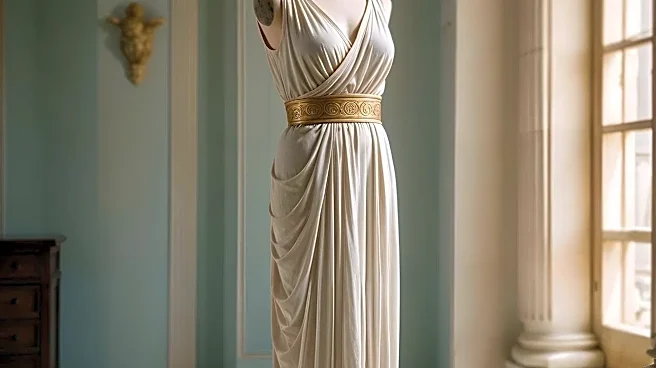
Inspired by ancient Greek statues, Vionnet was a master of draping. Her gowns often appeared to be sculpted from a single piece of fabric, wrapping and falling around the body with effortless grace. She famously worked on a miniature wooden mannequin, draping and cutting fabric to see how it would behave before scaling it up. You can introduce this element into your wardrobe through pieces with built-in draping, such as cowl necklines, halter tops, or dresses with artful twists and gathers. Don’t underestimate the power of a simple, large scarf or pashmina, which you can drape and style in numerous ways to evoke that Grecian-inspired elegance. The key is to find garments where the fabric itself creates the interest, rather than relying on heavy ornamentation.
Embrace a Minimalist Palette
While Vionnet occasionally used prints, her core philosophy was rooted in a more minimalist and pure color scheme. She famously favored black and white, calling them “pure color.” Alongside these, she used neutrals and soft, natural shades inspired by eye colors and lips. Building a Vionnet-inspired wardrobe means focusing on a cohesive palette of ivory, black, charcoal, and soft pastels. This allows the focus to remain on the cut, fabric, and silhouette of the garment. A wardrobe built on these tones is inherently timeless and versatile, allowing you to create countless elegant combinations where the architectural quality of each piece can truly shine.
Celebrate Simplicity and Freedom
At its heart, Vionnet's work was a declaration of freedom for the female form. She did away with stiffening, padding, and anything that distorted the body’s natural shape. Her clothes were designed to be worn without cumbersome underpinnings, allowing for a new kind of comfort and ease. This principle is perhaps the easiest to adopt. Seek out unstructured pieces that prioritize comfort without sacrificing elegance. Think of dresses you can slip on over your head, blouses with clean lines, and silhouettes that celebrate your shape rather than restricting it. Vionnet believed that “when a woman smiles, her dress must smile with her,” a testament to her belief that clothing should be a source of joy and liberation, not confinement.