




Brazil: The Soul of the Game
You can't talk about the World Cup without talking about Brazil. With a record five titles, they aren't just the tournament's most successful team; they are its spiritual center. Their legacy isn't just about winning, but *how* they won. The bright yellow
shirts, the samba rhythm in their play, and the philosophy of *Joga Bonito*—the beautiful game—are Brazil's gifts to the world. Their 1970 championship team, led by the immortal Pelé, is widely considered the greatest international side ever assembled. It was a perfect storm of individual brilliance and collective joy that culminated in a 4-1 final victory over Italy, with Carlos Alberto's sweeping team goal serving as the sport's ultimate mission statement. Even in leaner years, the expectation for flair and attacking verve remains, a testament to a legacy so powerful it serves as the benchmark for football as art.
Germany: The Unrelenting Machine
If Brazil is the art, Germany is the science. Four-time winners and four-time runners-up, their legacy is one of astonishing, relentless consistency. The Germans have built an identity around tactical discipline, mental fortitude, and an uncanny ability to perform under pressure. They don't always dazzle, but they almost always advance. From Franz Beckenbauer, the elegant sweeper who won as both player and manager, to the goal-scoring prowess of Gerd and Miroslav Klose, Germany has produced icons of efficiency. Their World Cup story is filled with dramatic penalty shootouts, improbable comebacks, and a self-belief that seems to unnerve opponents before a ball is even kicked. The 7-1 demolition of host nation Brazil in the 2014 semifinal wasn't just a victory; it was the ultimate expression of German footballing logic—a cold, calculated, and terrifyingly effective masterclass.
Italy: The Masters of the Dark Arts
For Italy, victory is a complex, beautiful struggle. The *Azzurri* have four World Cup trophies built on a foundation of tactical genius and defensive steel. Their legacy is defined by *Catenaccio* (the chain), a system that prioritizes a rock-solid defense and punishes opponents with swift, deadly counter-attacks. They’ve perfected the art of absorbing pressure and winning with a single, decisive blow. This identity has created iconic moments of resilience. Think of Paolo Rossi's redemption arc in 1982, where he exploded to life to carry Italy to glory. Or Fabio Cannavaro's imperious defensive performance in 2006, leading his team to a gritty victory on penalties in the final against France. An Italian victory never feels accidental; it feels engineered, a triumph of strategy and collective will over chaos.
Argentina: The Land of Footballing Gods
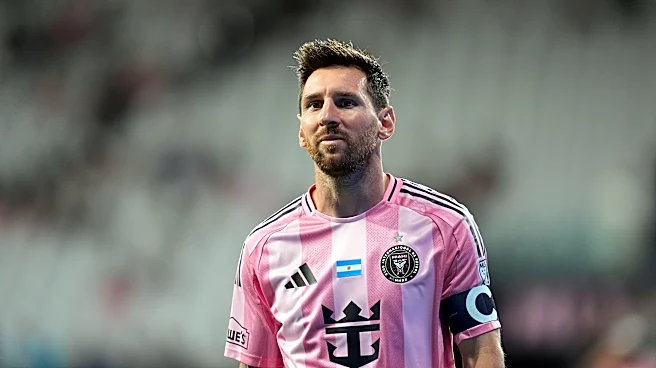
Argentina's legacy is a passionate, chaotic, and glorious narrative centered on singular, generational geniuses who carry the hopes of a nation on their shoulders. While they have three titles, their story is really about two men: Diego Maradona and Lionel Messi. In 1986, Maradona delivered the most dominant individual tournament performance in history, dragging his team to victory with a mixture of sublime skill (the “Goal of the Century”) and cunning gamesmanship (the “Hand of God”). For decades, that legacy seemed impossible to replicate. Then came Messi, who finally achieved his destiny in 2022, leading a fiery, passionate squad to a dramatic final victory. The Argentinian legacy is one of breathtaking talent, raw emotion, and the belief that one player can, and will, bend the sporting universe to his will.
France: The Modern, Multicultural Dynasty
France’s World Cup legacy is the most modern on this list, but its impact is undeniable. Since 1998, *Les Bleus* have reached four finals in seven tournaments, winning two of them. Their untouchable status comes from their model of success: a modern dynasty built on harnessing the incredible talent from the nation's diverse, multicultural suburbs. Their 1998 victory on home soil, led by the transcendent Zinedine Zidane, was seen as a unifying moment for the country. Twenty years later, a new generation, headlined by the electrifying Kylian Mbappé, stormed to victory in Russia with power, pace, and technical brilliance. France has become the blueprint for the modern super-team, a seemingly endless conveyor belt of world-class talent that combines physical prowess with European tactical sophistication. They are the powerhouse of the 21st century.