




Designed to Be Dismissed
Let’s be honest: the aliens in District 9, derisively nicknamed “Prawns” by the humans in Johannesburg, are not easy on the eyes. They are tall, insectoid beings with clicking mandibles, spindly limbs, and an exoskeleton that looks more like a crustacean's
than anything remotely familiar. Director Neill Blomkamp and the designers at Weta Workshop intentionally made them off-putting. They weren't meant to be cuddly; they were designed to look like pests, justifying the xenophobia and segregation they face. They are confined to a slum called District 9, a clear and biting allegory for the apartheid-era District Six in Cape Town. The audience is put in the same position as the film’s humans: our first instinct is revulsion. We are dared to look past their alien-ness, something the characters in the film refuse to do.
Humanity in the Inhuman
The story’s genius is that it forces us to find the humanity in a creature designed to repel us. That pivot point is Christopher Johnson. While many of the other Prawns seem lost or feral after decades of oppression, Christopher is intelligent, articulate (speaking his own language, subtitled for us), and driven by a singular, universally understood motivation: he is a father trying to save his child and get them home. He has spent twenty years scavenging technology and distilling fuel, not for an invasion, but for an escape. When we discover his secret lab under his shack, we don't find a weapon of mass destruction; we find a command module and a small, hopeful alien child. This reveal is the film's emotional turning point. Christopher isn't a monster. He’s a dad on a desperate mission, and suddenly his insectoid face carries a weight of emotion that no human character in the film can match.
An Uncomfortable Mirror
By making the aliens so visually ‘other,’ District 9 holds up a powerful and uncomfortable mirror to human prejudice. The film explores themes of xenophobia, social segregation, and systemic cruelty. The Prawns are exploited, lied to, and subjected to horrific medical experiments by the corporation MNU. Because they aren't human, the film can show the absolute worst of our behavior without pulling punches. The story follows Wikus Van de Merwe, a bumbling bureaucrat tasked with relocating the Prawns, who becomes infected with an alien fluid and begins transforming into one himself. As he slowly loses his human form, he gains the humanity he previously lacked, largely through his forced alliance with Christopher. The film asks a devastating question: who is the real monster here? The creature trying to save his family, or the humans who would dissect a sentient being for profit?
Stealing the Show by Force of Will
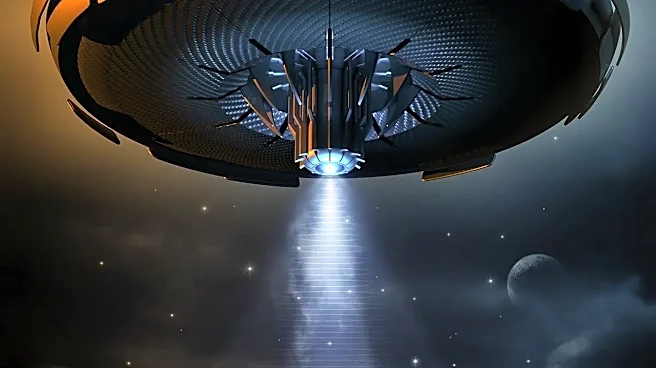
Though Wikus is the protagonist, Christopher Johnson is the story’s hero. He is the one with a clear goal, the technical knowledge, and the moral compass. Wikus is reactive, selfishly motivated at first only by his desire to be cured. Christopher is proactive, bravely fighting MNU soldiers and risking his own escape to help Wikus. His grief is palpable when he discovers the horrific experiments being performed on his people, and his resolve hardens. He hijacks military hardware, outsmarts corporate mercenaries, and ultimately pilots the command module not to a triumphant escape, but to the massive mothership to get help for his people. He becomes the moral center of the film, and his final promise to return in three years to cure Wikus is the single thread of hope in an otherwise bleak ending. He doesn't just steal scenes; he steals the entire emotional and ethical core of the movie.