




The Price of Perfection: What is IMAX Film?
Before we talk cost, let's establish what we're dealing with. An IMAX film negative isn't just a bigger version of regular film; it's a completely different beast. The format Nolan prefers is 15-perforation 70mm film (15/70). This means each individual
frame is gigantic, running horizontally through the camera and taking up the space of 15 perforations (the sprocket holes on the side). For comparison, standard 35mm film uses just four perforations vertically. This massive frame size, roughly ten times larger than a 35mm frame, is what allows for the format's legendary resolution and clarity. But it comes at a staggering cost. A single 1,000-foot roll of 65mm film stock, which provides only about three minutes of screen time, can cost over $1,500 for the raw stock alone. Add to that the specialized and expensive chemical processing and high-resolution scanning, and the price skyrockets. This is an analog, human-centric process, a far cry from the relative cheapness of digital data. It's a format originally designed for museum documentaries, not dialogue-heavy feature films.
The Shooting Ratio Game
In Hollywood, the "shooting ratio" is the amount of footage filmed compared to the amount that makes it into the final movie. If a director shoots 100,000 feet of film for a 10,000-foot final cut, the ratio is 10:1. In the golden age of Hollywood, a 10:1 ratio was common for 35mm productions. With the advent of digital, which has no raw stock or processing costs, those ratios have exploded. It’s not uncommon for a modern blockbuster to have a ratio of 100:1 or even higher. Directors can afford to let the cameras roll, capturing dozens of takes to find the perfect performance or angle. This freedom, however, is a luxury that disappears the moment you load a 500-pound magazine of 15/70 film into a camera. The cost of the negative itself acts as a hard budget ceiling, making an undisciplined, high-ratio approach financially impossible.
Nolan's Calculated Frugality
This is where Christopher Nolan’s signature filmmaking style is born not just from artistic preference, but from stark necessity. Knowing that every foot of wasted IMAX film is a significant financial loss, he operates with a shooting ratio that is legendarily low for a filmmaker of his scale. While exact numbers are proprietary, his process is famously meticulous. This discipline was forged early in his career; his first feature, "Following," was made for just $6,000, forcing him to rehearse for six months to ensure almost no film was wasted. He applies the same philosophy to his nine-figure blockbusters. He storyboards extensively and rehearses scenes with his actors until they are perfected before the loud, expensive IMAX camera starts rolling. This approach is the polar opposite of a director who “finds the movie in the edit.” Nolan must know exactly what he wants to capture long before he gets on set, forcing a level of intention that is rare in modern big-budget filmmaking.
The Ripple Effect on Set and Screen
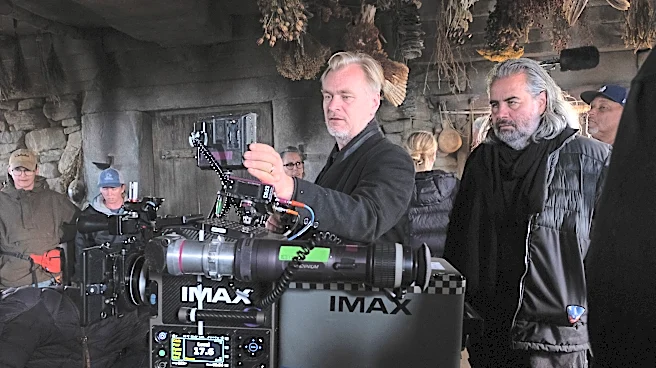
The commitment to IMAX film has massive practical implications. The cameras are incredibly loud, heavy, and cumbersome. For his 2026 film The Odyssey, the first feature shot entirely on IMAX film, the crew had to invent a 136kg soundproof housing (or "blimp") and a system of mirrors just so actors could see each other during dialogue scenes. The short three-minute runtime of each film magazine means the camera crew must operate with the speed of an F1 pit crew to reload without losing a scene's emotional momentum. Actor Tom Holland, who stars in the film, noted that this pressure requires actors to be incredibly precise, much like in live theater, because every take is so valuable. This enforced discipline means there is very little extraneous footage. Famed director Alfred Hitchcock was also known for his low shooting ratios, a method he used to control the studio by giving them no alternative way to edit his films. In the same way, Nolan’s low ratios and precise vision mean the final film is a direct, undiluted translation of his intent.