


From the Delta to Detroit
Like countless Black Americans during the Great Migration, John Lee Hooker left the rural South for the industrial North, seeking opportunity far from the sharecropper's life he was born into. After stops in Memphis and Cincinnati, he landed in Detroit
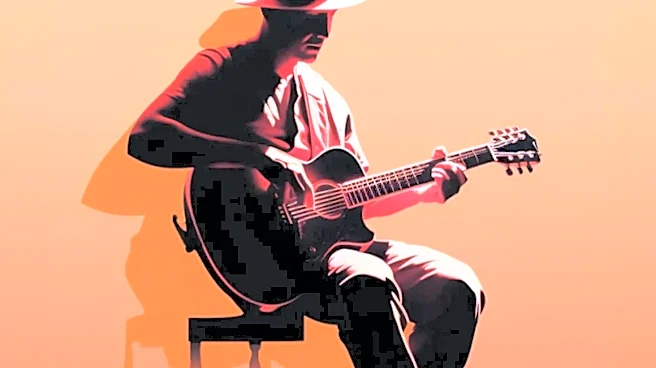
in 1943, drawn by the promise of plentiful factory jobs in the booming “Arsenal of Democracy.” He found work, first at Ford and later as a janitor in steel mills, joining the ranks of men who built the city's automotive might. By night, however, he traded his broom for a guitar, playing at house parties and in the noisy clubs along Hastings Street, the vibrant heart of the city’s Black entertainment district, Black Bottom. Music was a passion and a side hustle, but the dream of it becoming a career seemed distant and impractical.
A Sound Out of Time
Hooker’s style was unlike anything else happening in the city. While many blues bands were moving toward polished, piano-driven ensembles, Hooker’s music was raw, elemental, and deeply personal. His playing, learned from his stepfather in Mississippi, was idiosyncratic and rhythmically complex, a solo performance powerhouse. He didn't follow standard chord progressions; he followed his own internal meter, making him a fascinating but difficult artist to categorize or accompany. This unique genius was also a commercial liability. He was a man with a singular sound in a world that favored formula. T-Bone Walker reportedly gifted him an electric guitar, a necessity to cut through the din of the loud Detroit clubs, but the instrument in his hands sounded like no one else's.
The Brink of Burnout
For five years, Hooker lived this double life: janitor by day, bluesman by night. The grind was relentless, and the rewards were minimal. Pay for club gigs was low, and the life of a professional musician seemed unstable and fraught with uncertainty. He was a working man first, and the exhaustion and disillusionment began to set in. Music was becoming little more than a hobby, a way to blow off steam after a long shift. While there wasn’t a single dramatic moment of him throwing down his guitar, his situation was precarious. Without a significant break, it was far more likely he would have remained a factory worker who played a little music on the weekends, his world-changing sound confined to the smoky bars of Black Bottom.
One Fateful Recording
In 1948, a local record store owner named Elmer Barbee heard Hooker and introduced him to Bernard Besman, a record distributor and owner of Sensation Records. Besman was captivated by Hooker’s primitive, powerful sound and made a crucial decision: to record him alone. At United Sound Systems studio, the session was spartan. There was just Hooker, his electric guitar, his voice, and a piece of plywood placed under his stomping foot with a microphone to capture the percussive beat. The result was “Boogie Chillen’,” a raw, hypnotic travelogue of his nights on Hastings Street. It was part spoken, part sung, entirely improvised, and utterly mesmerizing. Besman knew he had captured lightning in a bottle.
The Boogie Heard 'Round the World
Besman licensed the track to Modern Records, and when it was released in late 1948, it became a massive, unexpected hit. “Boogie Chillen’” shot to number one on the R&B charts in 1949, its infectious groove echoing from jukeboxes across the country. For John Lee Hooker, everything changed. The success allowed him to quit his factory job for good and dedicate himself entirely to music. That one song, born from his frustration and captured with minimalist genius, saved him from a life of manual labor and launched a career that would span over 50 years, influencing generations of musicians from The Rolling Stones to ZZ Top. The world came incredibly close to never knowing the King of the Boogie.