






The Sheer Statement
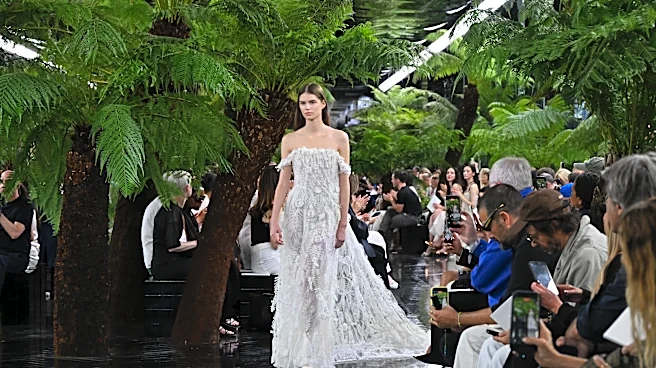
This season saw a continued fascination with transparency, but with a twist. At Chanel, for instance, Matthieu Blazy opened his fairytale-inspired show with gauzy, deconstructed suits that hinted at the form beneath without fully revealing it. These weren't
the brash "naked dresses" of red carpets past, but rather a more nuanced exploration of sheer fabrics. The effect was one of layered intimacy, suggesting that revealing the body is now as much about intellectual curiosity as it is about provocation. This use of transparency speaks to a broader cultural moment where bodily autonomy is a constant conversation. By choosing to reveal and conceal with such artistry, designers are giving their clients the tools to participate in that dialogue on their own terms, using clothes as a second skin that is both armor and ornament.
An Architecture of Modesty
On the other end of the spectrum is a powerful return to modesty, not as a form of puritanism, but as a display of authority. At Dior, Jonathan Anderson’s sophomore couture collection was a masterclass in sculptural form, using pleats, knots, and folds to create structure that often concealed the body's natural lines. Inspired by the work of artist Lynda Benglis, jackets were twisted into new shapes and coats cocooned the body, emphasizing the garment's architecture over the wearer's anatomy. This approach aligns with a trend that has been building in couture, where designers use full coverage, high necklines, and dramatic volume to signal power. In this context, modesty isn’t about hiding; it’s about control. It suggests that true confidence lies not in what you show, but in what you choose to hold back.
Skin as a New Material
Perhaps nowhere was the conversation around skin more literal than at Schiaparelli. Creative Director Daniel Roseberry, whose collections often play with surrealism, took the idea of a second skin to its extreme. For his Fall 2026 collection, titled “The Abyss,” he collaborated with a cinematic effects atelier to create pieces from silicone that perfectly mimicked the look and feel of human skin. Models wore molded corsets and flesh-toned pieces that blurred the line between body and garment, creating a futuristic, almost bionic effect. These were not garments about revealing skin, but about reimagining it altogether. Roseberry’s work raises fascinating questions about where the body ends and fashion begins, suggesting that in an age of digital filters and AI, our very skin has become a new, malleable material for self-expression.
The Choice is the Statement
Ultimately, the tension between revealing and concealing on the couture runways isn't a battle for a single trend to win. Instead, it reflects the multifaceted nature of power and femininity in 2026. Whether a designer chooses to use sheer organza, architectural tailoring, or skin-like silicone, they are engaging in a political act. They are offering women different vocabularies to express their relationship with their own visibility. The decision to wear a voluminous, floor-length gown or a translucent, body-skimming dress becomes less about being "in" or "out" and more about a personal declaration. The quiet politics of couture week is that both gestures—baring it all and covering it up—are presented as equally valid, equally powerful statements of choice.