




1. Ventilating a Custom Hairline
For ultimate realism, nothing beats ventilating. This process involves manually adding individual hair fibers to the lace front of a wig using a special needle. It allows you to create a perfectly new, softer, or more character-accurate hairline from
scratch.
2. Plucking the Hairline and Part
Most wigs come with a dense, uniform hairline. To mimic natural hair growth, carefully use tweezers to pluck out some of the fibers along the hairline and the part. This creates a less stark, more graduated effect that significantly boosts realism.
3. Dyeing Synthetics with Fabric Dye
Achieving a custom color on a synthetic wig is possible with heat and the right dye. Using products specifically designed for synthetics, like Rit DyeMore, in a hot water bath can produce vibrant, permanent colors that won't bleed or fade. Always test on a small weft first, as heat can alter the fiber's texture.
4. Stacking Wigs for Extreme Volume
When one wig isn't enough, stack two. This technique, popular in drag and J-rock cosplay, involves securing one wig on top of another to create massive volume and height. The top wig is often gutted and sewn onto the base wig for a permanent, secure hold.
5. Building with Foam Core Structures
For gravity-defying spikes, horns, or massive updos, hair alone won't cut it. Carve a base shape out of lightweight EVA foam or expanding foam, attach it to the wig base, and then glue hair fibers over it. This provides a stable and lightweight foundation for impossible styles.
6. Seamlessly Blending with Bio Hair
For characters without bangs, blending the front of the wig with your own hair can create a flawless transition. This involves leaving a small section of your own hair out at the front, styling it back over the edge of the wig, and blending it to hide the seam.
7. Harvesting and Adding Wefts
To add thickness, create highlights, or blend colors, you can harvest wefts (the tracks of hair) from one wig and sew them into another. This is a fantastic way to repurpose old wigs and gives you complete control over the final color and density of your piece.
8. Rooting for Realistic Depth
Natural hair is rarely one solid color from root to tip. Adding a darker root to a lighter wig creates an illusion of depth and natural growth. This can be done carefully with an airbrush, fabric markers, or even dry shampoo sprayed at the base of the fibers.
9. Using Steam to Set Shapes
Synthetic fibers are essentially plastic, which means heat can be used to permanently set them. A fabric steamer is the perfect tool for locking in curls, waves, or even straightening fibers without the risk of scorching that comes with a flat iron. The shape will hold until heat is applied again.
10. Creating a Faux Widow's Peak
If your character has a specific hairline shape like a widow's peak, you can build one onto a standard lace front. This involves using extra lace, ventilating new hairs into the desired shape, and then carefully gluing and blending it into the main wig.
11. Strategic Thinning for Natural Density
Just as important as adding hair is knowing when to remove it. Many wigs are overly thick, which can look unnatural. Using thinning shears to selectively remove bulk, especially around the face and at the crown, can make a wig look far more believable.
12. The Glue-Wash Reset Method
For heavily styled, product-laden wigs that need cleaning, a regular wash can ruin the style. The glue-wash method involves coating the styled sections in water-soluble school glue, letting it dry, and then washing the entire wig. The glue protects the style while allowing the base to be cleaned.
13. Building with Buckram and Wire
For large, architectural hair structures like Marie Antoinette-style updos, a soft wig cap isn't enough. Building a custom foundation from buckram (a stiff, theatrical fabric) and millinery wire creates a rigid cage to build the style upon, ensuring it holds its shape all day.
14. Creating Realistic Faux Sideburns
To create a more masculine or character-specific hairline, you can construct sideburns on separate pieces of lace. These are then applied to the temples with spirit gum or lace adhesive, seamlessly extending the wig's hairline down the side of the face.
15. Splicing Wigs for Dual Tones
For characters with split-color hair, you can create a clean, dramatic look by literally splicing two different colored wigs together. This involves cutting two wigs in half and carefully sewing the desired halves together for a single, perfectly divided creation.
16. The Strong-Hold Hairspray Method
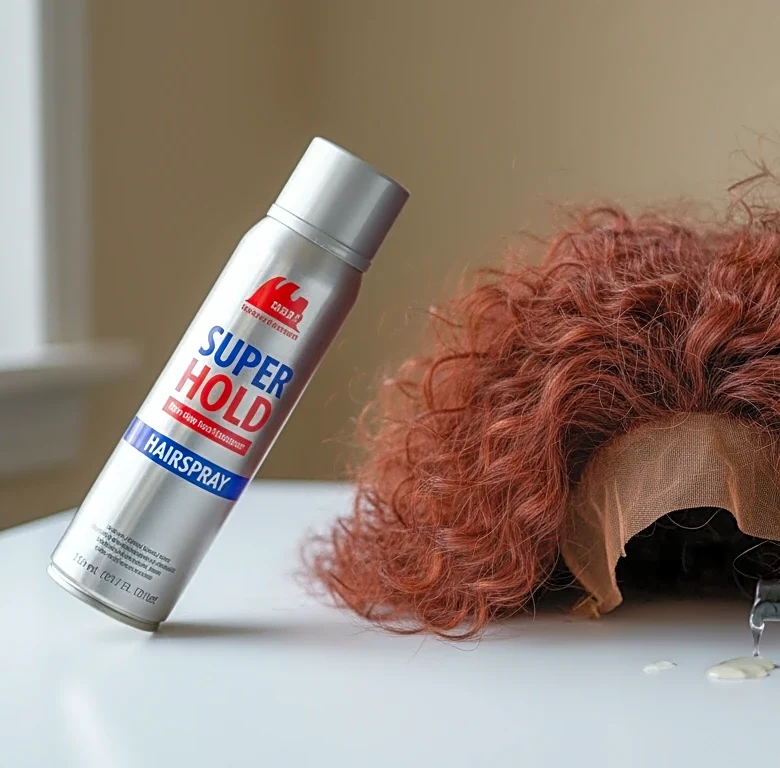
For securing a lace front without messy glues, ultra-strong hold hairsprays are a popular choice. By spraying a thick layer onto the skin and pressing the lace into it as it dries, you can create a temporary but surprisingly sturdy bond that lasts for hours and dissolves with water.