


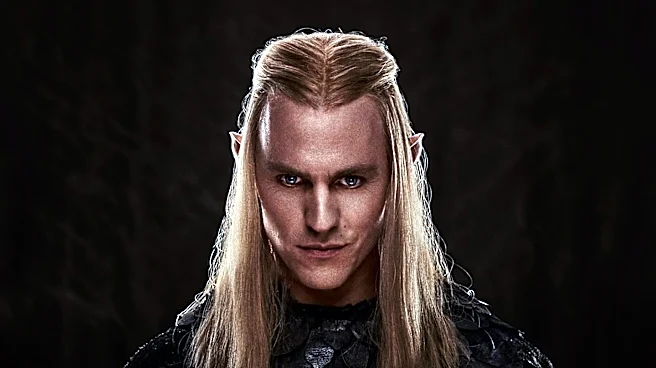
Vecna in 'Stranger Things'
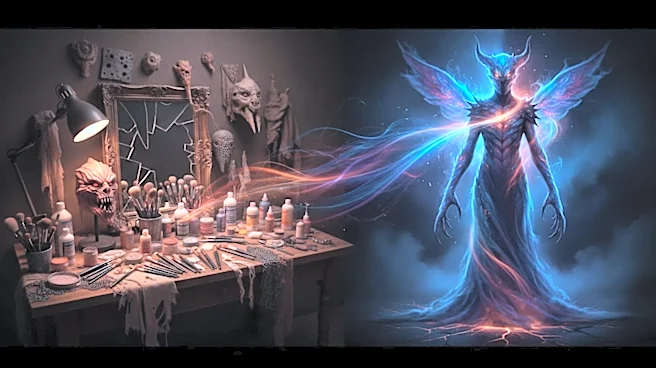
To create the main villain for the fourth season of 'Stranger Things,' the creators wanted a monster that could interact directly with the cast on set. They turned to legendary prosthetics designer Barrie Gower, known for his work on 'Game of Thrones.'
The result was Vecna, a full-body practical effect masterpiece. Actor Jamie Campbell Bower endured a grueling application process that initially took over eight hours, starting around 2 a.m. for a full day of filming. The suit was comprised of about 25 overlapping silicone and foam latex pieces, all pre-painted with a complex color palette inspired by bruised tones and strange vegetation. A new set of appliances had to be used for every single day of shooting because they were destroyed by the end of the day. The character’s menacing, elongated left hand was a practical effect, too—a glove with mechanical aluminum finger extensions, allowing for an unnerving, tangible performance that digital effects alone couldn't replicate.
The Clickers and Bloaters in 'The Last of Us'
Adapting the terrifying infected from the beloved video game 'The Last of Us' was a major challenge, but the show's creators insisted on using practical effects whenever possible to make the threat feel real. Prosthetics designer Barrie Gower was again tasked with bringing the fungi-covered monsters to life. The Clickers—infected humans blinded by fungal growth—were created using intricate prosthetics applied to performers who could mimic the creature's signature movements and sounds. Star Pedro Pascal admitted the practical Clickers on set were almost too realistic and terrifying. For the even more formidable 'Bloater' seen in episode 5, stuntman Adam Basil, who stands 6'6", wore a specially created suit that weighed roughly 80 pounds. While some CGI was used to enhance the final look, the foundation was a physical creation that gave the actors a real, horrifying monster to react to on set, a decision praised by critics and fans.
Older Rebecca Pearson in 'This Is Us'
Not all transformations involve monsters. On NBC's hit drama 'This Is Us,' Mandy Moore portrayed matriarch Rebecca Pearson from her 20s all the way into her 80s as she battled Alzheimer's. This required a subtle but incredibly complex aging makeup process. Early makeup tests were reportedly "terrifying," with initial concepts making Moore look almost 100 years old. The team eventually landed on a sophisticated process that involved 10 different facial prosthetics, an elaborate makeup application to create wrinkles and age spots, and a tight wig that sometimes gave Moore headaches. The entire transformation took between two and four hours each time. The effect was so convincing that Moore noted the crew on set would often treat her more gently when she was in her 'Old Rebecca' makeup, instinctively wanting to help her out of her chair even though she was still perfectly capable. After six years, Moore said her skin was happy for a break, but she also missed the process that allowed her to fully embody the character across her entire life.
The Night King in 'Game of Thrones'
Long before he created Vecna, Barrie Gower was responsible for another of television’s most iconic villains: the Night King from 'Game of Thrones.' The leader of the White Walkers had a distinct, chilling look that was achieved almost entirely through practical prosthetics. Actor Vladimir Furdik would spend hours in the makeup chair being fitted with silicone appliances that created the character's bone structure, icy skin texture, and signature horns. The process was a delicate dance of applying multiple pieces to create a seamless, otherworldly appearance. The eyes, however, were one of the few elements enhanced with visual effects to give them their piercing, inhuman blue glow. This blend of practical makeup with a light digital touch allowed the Night King to have a commanding physical presence in his scenes, making him a tangible and formidable foe for the heroes of Westeros.