




The Scene of the Crime
The location was the newly built home of Jacob Graff, a bricklayer. Thomas Jefferson, finding his lodgings in the heart of the city too noisy and uncomfortable, rented the entire second floor. Located at the corner of Seventh and Market Streets, it was considered
the outskirts of town, surrounded by open fields. But quiet did not mean peaceful. The Philadelphia summer was brutal, with temperatures climbing into the 80s and 90s. With windows kept open for any hint of a breeze came the flies and smells from a nearby stable. This wasn't a stately hall of ideas; it was a cramped, humid, and smelly workspace for a task that could get a man killed. It’s in this unglamorous setting—a rented room over the street—that the words that would create a nation were assembled.
The Protagonist and His Burden
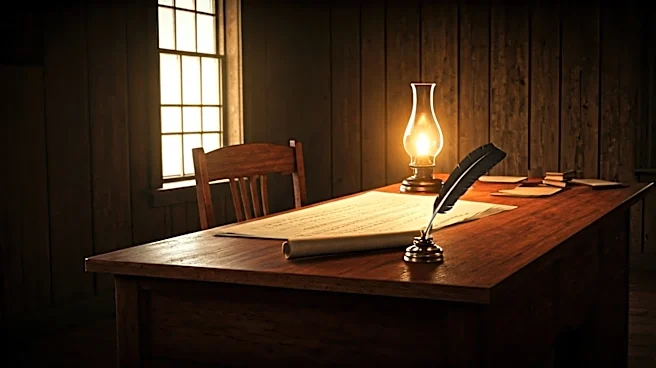
Enter Thomas Jefferson, just 33 years old. He wasn't a seasoned statesman but a quiet, bookish Virginia planter. He was also a gifted writer, a fact not lost on his colleagues in the Second Continental Congress. On June 11, 1776, Congress appointed a "Committee of Five" to draft a declaration explaining their momentous decision to separate from Great Britain. The committee included the formidable John Adams and the world-famous Benjamin Franklin, but when it came to holding the pen, Adams pushed the task onto Jefferson. For the next 17 days, Jefferson worked in near-isolation, often on a portable writing desk he had designed himself. The mission was clear: articulate a legal and philosophical justification for revolution. The penalty for failure was equally clear: a traitor's death. As Franklin would reportedly quip, "We must, indeed, all hang together, or most assuredly we shall all hang separately."
A Ticking Clock of Spies and Debate
Every word Jefferson wrote was under a ticking clock. Just blocks away at the Pennsylvania State House (now Independence Hall), the debate over independence raged. The windows there were often kept shut, despite the heat, to prevent spies from overhearing the treasonous talk within. The political situation was precarious. Not all colonies were on board; a complex political battle was underway to get delegations authorized to vote for a full separation. Meanwhile, the war was not a distant concept. The British military was a formidable force, and the colonists' army was struggling. The very act of drafting this document was an act of defiance, done while the outcome of the conflict was dangerously uncertain. Jefferson had from June 11 until the committee's deadline of June 28 to produce a draft.
The First Round of Edits
Writing is rewriting, even for a document destined for history. Before the draft ever reached the floor of Congress, Jefferson first submitted it to the other members of the Committee of Five. Though the committee left no formal minutes of its meetings, we know that John Adams and Benjamin Franklin provided the most significant feedback. They made a handful of changes, preserving Jefferson's powerful core structure while tightening the language. This was the first test, a review by some of the sharpest minds in the colonies. The draft passed, and on June 28, the committee presented their work to Congress. The document had survived its first trial, but the real crucible was about to begin.
Mangled by Committee
Jefferson, a proud author, was forced to sit in silence for two full days as the Continental Congress took its own pen to his work. From July 2nd to the 4th, the delegates debated the declaration line by line, making 39 additional changes to the draft. Jefferson later complained that his text was "mangled." The most significant deletion was an entire passage condemning King George III for the transatlantic slave trade—a compromise made to appease the delegations from South Carolina and Georgia. As Jefferson writhed, Franklin reportedly comforted him with a story about a hatter whose sign was edited down by committee to its barest essentials. The final document was no longer the work of one man in a stuffy room, but the collective statement of a new nation, forged in the heat of debate and compromise.