




The Comfort of the Low Block
The most obvious sign of a trap is the defensive posture known as the "low block." This is when a team pulls nearly all its players deep into its own defensive third of the field. They'll arrange themselves in a compact shape, often with two tight lines
of four or five players, very close to their own penalty box. The goal is to deny the opponent any space in the most dangerous areas near the goal. It can look passive, even negative, and is sometimes called "parking the bus." But don't be fooled. A well-drilled low block isn't just about defending; it's about luring the attacking team forward, making them commit more players to breaking down the defense, and creating vast open spaces behind them to exploit on a counter-attack. This is especially common in knockout games where a perceived underdog wants to frustrate a stronger opponent.
The Deliberately Open Lane
A truly sophisticated trap isn't just about sitting deep; it's about dictating where the other team attacks. A trapping team won't just block everything; they will intentionally leave a specific passing lane open. This is the kill zone. Coaches will often identify a weaker opposing player—someone less comfortable on the ball or playing on their weaker foot—and design their defense to funnel the ball to that specific player. They might leave the pass to the fullback on the sideline looking like the easiest, most obvious option. To the attacking team, it looks like a safe pass into open space. But to the defending team, it's the "pressing trigger"—the signal they've been waiting for.
The Sudden Swarm
Once that trigger pass is played, watch for the sudden, violent shift in intensity. The team that looked passive and stationary for minutes will explode into action. The player receiving the pass is immediately swarmed by two or three opponents who were anticipating the pass all along. Their goal is to cut off all of his passing options and force a panicked mistake or a turnover. The key here is coordination. This is not one player randomly chasing the ball. It's a synchronized press designed to win the ball back in a specific area of the field where the trap was set. The difference between a lazy defensive shape and a trap is the explosive, collective energy unleashed the moment the bait is taken.
Watch the Forwards, Not the Ball
While the attacking team is patiently trying to pick apart the low block, an amateur observer will just watch the ball. The smart fan watches the forwards of the defending team. Are they just standing around, resting? Or are they taking up specific, intelligent positions? In a trapping system, the forwards aren't just the first line of defense; they are the escape valve for the attack. They will often stay slightly disconnected from the deep defensive block, lurking in positions that may seem defensively irresponsible but are perfectly placed to receive a quick pass the moment the ball is won. Their positioning is a dead giveaway. They are anticipating the turnover and are already preparing for the counter-attack, ready to sprint into the space the opponent has vacated.
The Art of the Counter
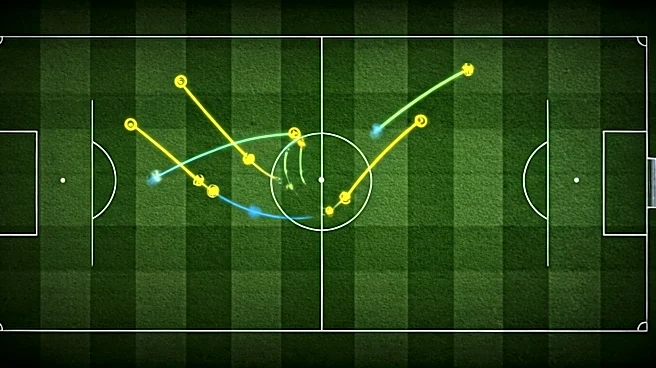
Winning the ball is only half the battle; the trap's success is measured by the efficiency of the counter-attack that follows. After the swarm forces a turnover, the trapping team will transition from defense to offense with blistering speed. You'll see immediate, vertical passes forward, aimed at exploiting the space behind the over-committed attacking team. Players who were just defending their own box moments earlier will make lung-busting runs to join the attack, creating a sudden numerical advantage. This is why knockout tournament soccer can feel so dramatic and ruthless. A team can feel completely in control one second and be picking the ball out of their own net the next, all because they walked into a perfectly laid trap.