






First, Remember Why the Paint Matters
Before we get to the pitch, let's head to the hardwood. In basketball, the painted area under the hoop is the most valuable real estate on the court. Why? Because it’s the zone of highest probability. Layups, dunks, and close-range shots are money. Controlling
the paint means controlling the game. If your team dominates inside, you’re getting easy buckets, grabbing offensive rebounds for second-chance points, and drawing fouls that put the other team in trouble. Defensively, a dominant paint presence like Rudy Gobert or a prime-era Tim Duncan alters shots, clogs passing lanes, and forces opponents into taking low-percentage jumpers. You can have the best three-point shooters in the world, but if you consistently lose the war in the paint, you’re fighting an uphill battle. It’s the game’s physical and strategic heartland.
Now, Meet Soccer’s Engine Room: The Midfield
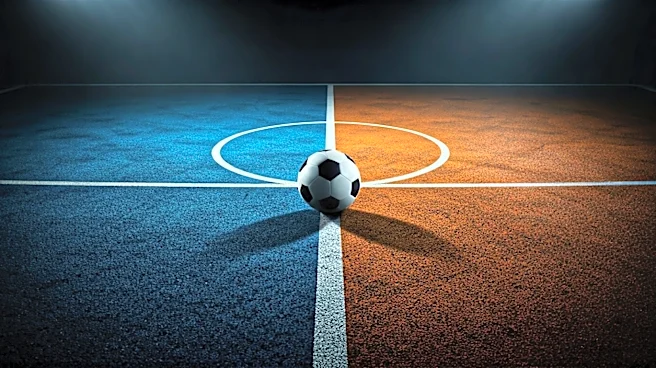
On a soccer field, the midfield is the vast expanse between your team's defenders and forwards. It’s not just dead space players run through; it is the game's central nervous system. This is where possession is won and lost, where the tempo of the game is set, and where attacking moves are either born or extinguished before they even begin. While goals are scored in the penalty box and saved near the goal line, the events that lead to those moments are almost always dictated by what happens in the midfield. A team that can’t control this area is like a body without a spine—disconnected, reactive, and easily broken apart. They’ll either be pinned back in their own half, unable to get the ball to their strikers, or they’ll watch helplessly as the opponent streams through the center of the park time and time again.
The Midfield is the Paint on Grass
This is where the analogy clicks. Winning the midfield battle is the soccer equivalent of winning the paint. A dominant midfield provides the same three strategic advantages.
1. **Creating High-Percentage Chances:** Just as working the ball into the paint leads to a layup, controlling the midfield allows a team to probe for weaknesses and deliver a killer pass—the “assist” before the assist. A midfielder who can thread a ball between defenders to a running forward has just created a high-probability scoring opportunity, soccer’s version of a fast-break dunk.
2. **Controlling the Flow (Second-Chance Points):** In basketball, an offensive rebound gives you another possession. In soccer, a strong midfield recycles possession constantly. When an attack breaks down, midfielders are there to win the ball back immediately, preventing a counter-attack and allowing their team to build pressure again. It’s suffocating for the opponent.
3. **Defensive Disruption (Altering the Shot):** A shot-blocker in the paint makes drivers think twice. A great defensive midfielder does the same for attacking players. They are the destroyers—players like N'Golo Kanté or Casemiro who excel at tackling, intercepting passes, and generally blowing up the opponent’s plans. They are the wall that ensures a problem never reaches the back line.
The Players Who Own This Space
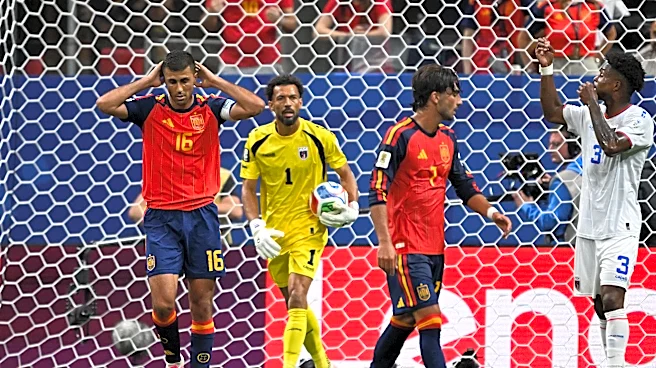
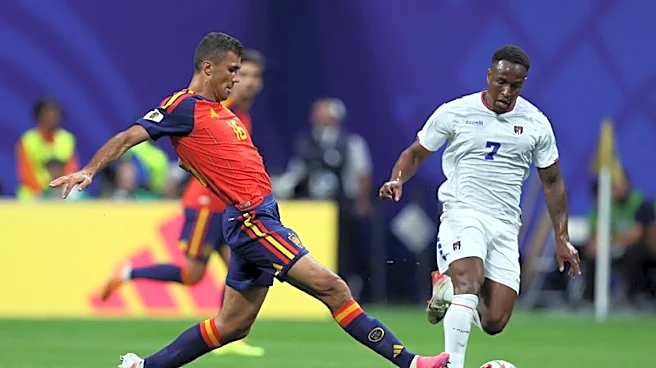
To make it even clearer, think of the player archetypes. Every dominant basketball team has a force in the paint. In soccer, every great team has a general in the middle. You have your physical enforcers—the “Shaq” types—like Rodri for Manchester City, whose size and tactical intelligence allow him to physically own the space and snuff out danger. He’s the defensive anchor around which everything pivots. Then you have the creative geniuses—the “Point Guard” types—like Kevin De Bruyne or Luka Modrić. They aren't just in the midfield to defend; they are there to conduct the orchestra, playing the passes that no one else sees. They are the playmakers who, from the center of the park, function like a point guard at the top of the key, dictating where the ball goes and how the attack unfolds. The best teams often have a combination of both.