





Why Your Brain Fears the Sideways Glance
Our brains are ancient hardware running modern software. For millennia, survival depended on detecting threats not just head-on, but from every possible angle. That rustle in the grass to your left wasn't just background noise; it was a potential predator.
This evolutionary wiring makes us acutely sensitive to movement and stimuli in our peripheral vision. Haunted house designers exploit this primal instinct masterfully. While you’re consciously processing the big, scary thing in front of you, your subconscious is on high alert for flanking dangers. A scare that comes from the side bypasses your analytical brain and triggers an immediate, visceral fight-or-flight response. It feels more real and more dangerous because, on a primitive level, your brain believes it is. It's not the monster you see that gets you; it's the one you almost didn't.
The Art of Misdirection
The core of a great peripheral scare is misdirection. Halloween Horror Nights creative teams are masters of directing your attention. They use elaborate, brilliantly lit set pieces, loud sound cues, and animatronics to create a central focal point in a scene. You are conditioned to look at the massive creature, the flashing lights, or the victim pleading for help in the center of the room. Your eyes lock on, your focus narrows, and you become vulnerable. This is by design. The designers intentionally shorten sightlines and use confusing layouts to keep you disoriented. Just as you feel you have a handle on the main threat, a scare actor, often camouflaged or using a small, quiet movement, strikes from a 'boo hole' in the wall or from a darkened corner you'd already dismissed. This tactic preys on your limited attentional resources, creating a scare that feels earned and genuinely surprising.
Where Horror Lurks in the Margins
Over the years, numerous HHN houses have perfected this technique. Think of a house themed around a dense jungle or an alien ship. You're so busy looking at the detailed foliage or the complex control panels that you fail to notice the performer in a ghillie suit blending perfectly with the wall until they lunge. Similarly, houses set in cluttered attics or basements use piles of debris to hide scare actors who wait for your eyes to fix on a larger prop. One of the most common and effective tricks involves two scares. A loud noise or animatronic triggers to your left, drawing everyone's gaze. As the entire conga line of guests turns to look, a scare actor hits from the right, catching everyone completely off guard. It’s a beautifully simple manipulation that turns the entire group's reaction into part of the experience, proving the most potent scares are about timing and psychology, not just loud noises.
The Weakness of the Center-Frame Scare
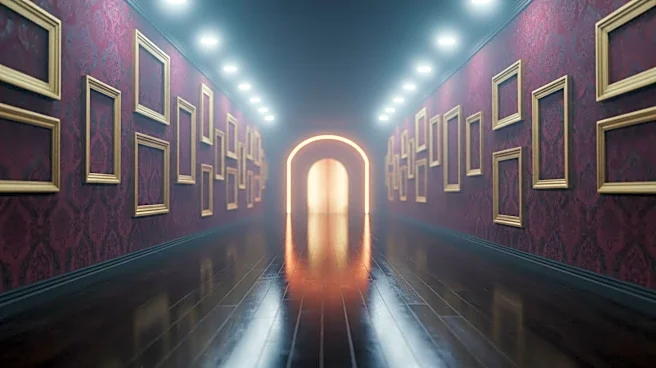
Contrast this with less effective designs. A monster waiting in plain sight at the end of a long, straight hallway loses all impact. You see it coming, you brace for it, and the resulting scare is obligatory rather than terrifying. Scares that only come from the front can even cause a traffic jam, as startled guests back up into the people behind them, breaking the immersion. While a giant, roaring monster is visually impressive, it often serves better as the distraction than the payoff. The true artistry of Halloween Horror Nights isn't in what it shows you, but in what it hides just at the edge of your sight. The most memorable moments are born from that split-second realization that the danger you were so fixated on wasn't the real threat at all.