







The World Stage
The scene was the 2022 FIFA World Cup in Qatar. In a high-stakes Group E match, Japan faced global powerhouse Spain. For Japan, a win was essential to guarantee a spot in the knockout rounds. The consequences were massive, not just for them but for another
giant of the sport, Germany, whose fate hinged on this game's outcome. Spain took an early lead, and as the second half began, Japan needed a miracle to turn the tide and keep their World Cup dreams alive.
A Game of Millimeters
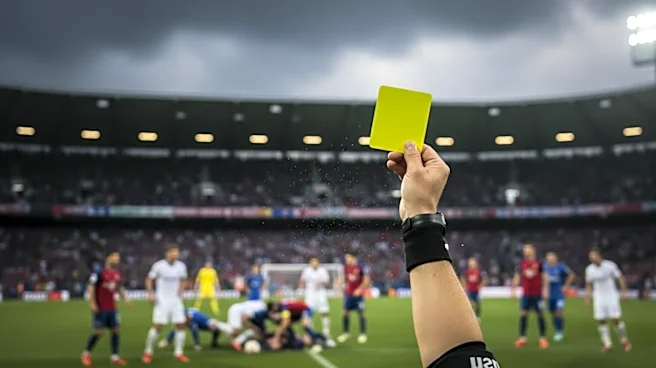
In the 51st minute, with the score tied 1-1, the game-defining moment arrived. A cross flew toward the Spanish goal line, seemingly destined to go out for a goal kick. Japanese winger Kaoru Mitoma launched into a desperate slide, hooking the ball back from the brink just as it appeared to cross the line. The ball looped up for his teammate, Ao Tanaka, who bundled it into the net. To the naked eye and on initial TV replays, Mitoma's effort looked valiant but futile. The ball looked out. The linesman raised his flag, and the referee disallowed the goal.
The Agonizing Wait
Then came the intervention that silenced the stadium and captivated a global audience: the Video Assistant Referee (VAR) review. For over two minutes, an unseen team of officials scrutinized every available angle. Pundits and fans alike were convinced the replay would confirm the on-field decision. Initial camera views shown to the public seemed to show a clear gap of green grass between the ball and the white line. The delay was excruciating, fueling confusion and intense debate. Finally, the referee received the word: the goal stood. Japan was ahead 2-1.
Why the Goal Was Legal
The decision hinged on a combination of sophisticated technology and a widely misunderstood rule. The key wasn't the traditional side-angle cameras but the goal-line cameras, which provide a bird's-eye view. According to FIFA's Law 9, the ball is only out of play when the whole of the ball has passed over the whole of the line, either on the ground or in the air. Because a soccer ball is a sphere, its curve means a portion of it can be hovering over the line even if the part touching the ground is outside. The bird's-eye view, provided by VAR, showed that the slightest sliver of the ball's curvature—a mere 1.88 millimeters, according to some analyses—was still vertically aligned with the line. It was in.
Perception vs. Reality
This moment became a perfect illustration of the limits of human perception. From almost any angle, the ball looked out. The optical illusion created by the ball's curve and the camera perspective was powerful. But the technology, immune to such illusions, delivered the objective truth based on the rules. FIFA later released the official goal-line camera image to quell the controversy, confirming the VAR's decision. It was a vindication for the technology, showing that what we see isn't always what is. The call was a triumph of precision over perception.
The Legacy of a Phantom Goal
The goal had immediate and dramatic consequences. Japan held on to win, topping their group in a stunning upset. The result, combined with their own win over Costa Rica, was not enough for Germany, who were shockingly eliminated from the tournament based on this fine margin. But the legacy of the goal goes far beyond one tournament's results. It has become the go-to example for explaining both the intricacies of soccer's rules and the undeniable impact of VAR. It sparked conversations about whether technology enhances or detracts from the sport's human element, but it ultimately proved how it can correct a call that every human eye might have gotten wrong.