


The Glass Ceiling of the Round of 16
To understand the frustration, you just need to look at the history books. Since its modern revival in 1990, the USMNT has established itself as a World Cup regular, a respectable mid-tier power. But respectability has a ceiling. In 2002, a promising
quarterfinal run ended against a clinical German side. In 2010, it was an extra-time heartbreaker against Ghana. In 2014, goalkeeper Tim Howard put on a legendary, 15-save performance against Belgium, but it wasn’t enough to stop the inevitable loss. And most recently, in 2022, a young, energetic U.S. team was clinically dismantled by the Netherlands. The names and places change, but the story remains the same: the U.S. can hang with the big boys for a while, but it can’t beat them when it matters most. This isn't about failing to qualify (2018 notwithstanding); it's about what happens once they get to the big dance. The U.S. consistently proves good enough to get out of the group, but not good enough to win a do-or-die match against a top-10 nation.
Why the Pattern Exists
This historical shortcoming isn't for a lack of effort or athleticism, traits the USMNT has always had in spades. It’s been a deficit of technical quality and, more importantly, tactical sophistication under pressure. For years, the American player pool was comprised of top athletes who became soccer players, whereas European and South American powers developed top soccer players who were also great athletes. The difference is subtle but crucial. When facing an elite opponent like Belgium or the Netherlands, the margins for error shrink to zero. A misplaced pass, a moment of tactical naivety, or a heavy first touch is the difference between clearing the ball and conceding a goal. U.S. teams have historically been out-thought, not just out-played. They’ve relied on grit, organization, and counter-attacks—a solid strategy for an underdog, but one that has its limits against teams that can control possession and surgically unlock a defense.
The Champions League Generation
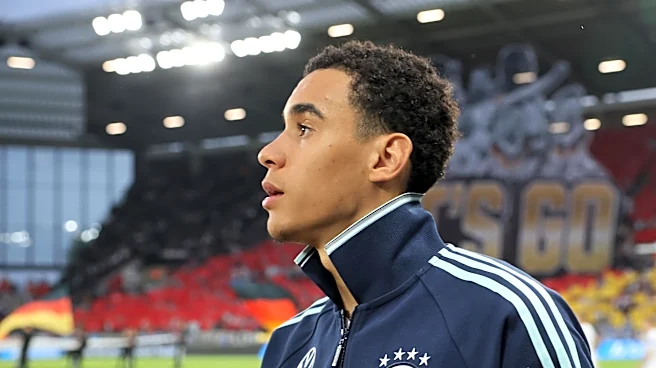
So, why the hope for 2026? Because for the first time, the core of the USMNT isn't just watching the world’s best players on TV; they’re playing with and against them every week. This isn’t a handful of token players abroad. It's a foundational shift. Christian Pulisic and Yunus Musah at AC Milan, Weston McKennie and Tim Weah at Juventus, Ricardo Pepi at PSV Eindhoven, Gio Reyna at Borussia Dortmund, Folarin Balogun at AS Monaco, and Tyler Adams at Bournemouth—these players aren't just in Europe, they’re at clubs expected to compete for titles and play in the grueling UEFA Champions League. This weekly exposure to top-level speed, technique, and tactical pressure is something no previous U.S. generation has ever had. They are being forged in the same fire as their future World Cup opponents. This experience normalizes the challenge. Facing a Dutch midfielder isn’t a novelty; it’s just another Tuesday in training.
Home-Field Advantage and the Final Hurdle
The other massive factor is that the 2026 World Cup is on home soil. The U.S. will be a host nation, playing in front of sold-out, partisan crowds in familiar stadiums and climates. This eliminates the wearying travel and cultural adjustments that can drain a team. The entire tournament infrastructure will be built to their advantage. But this advantage comes with immense pressure. The expectation won’t be to just have a good showing; it will be to make a deep run. The final hurdle remains translating this individual talent and home-field advantage into a cohesive unit that can execute a winning game plan. The coaching, the team chemistry, and the mental fortitude to perform when the entire nation is watching will be tested like never before. The talent is there. The experience is accumulating. The stage is set. The pattern has been established over decades, but 2026 presents the single greatest opportunity the U.S. has ever had to finally break it.