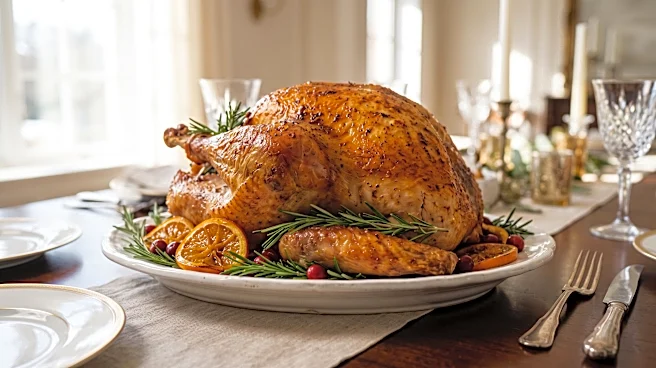







The scene is perfect: a family gathered around a glistening, golden-brown turkey. But behind this idyllic movie moment lies a logistical nightmare. That one perfect bird is one of the biggest headaches a film crew can face. Here's why.
The Trouble with Take One
The most immediate
problem with a roast turkey is simple: you can't un-carve it. A film scene isn't shot in one go. It's a collection of dozens of takes from different angles, often filmed hours or even days apart. An actor might slice into the turkey breast for a wide shot. For the next take, or a close-up on another actor, that slice has to be there, exactly as it was. But what if the director needs a fresh take of the initial carving? Suddenly, the previously sliced turkey is useless. This is the core of the continuity problem: ensuring that every detail, from the level of wine in a glass to the state of a half-eaten turkey, remains consistent across every shot. That golden-brown bird can't just be delicious; it has to be perfectly, painstakingly consistent for hours under hot studio lights.
The Prop Master's Gambit
So, how do filmmakers solve the turkey dilemma? They cheat. Brilliantly. Prop masters and food stylists have a whole menu of tricks. For a big film, there might be a whole flock of identical turkeys at the ready—some fully cooked, some partially cooked, some just for background dressing. In many cases, the 'hero' turkey—the one that gets carved on camera—is barely cooked at all. The outside is often browned with a torch and painted with a mix of coloring and oil to create that perfect golden look, while the inside remains raw and firm, making it easier to perform the same 'first cut' over and over. For scenes where the food just has to sit there, crews often use hyper-realistic, non-perishable fakes made from resin or silicone. These props can endure long shoot days without spoiling, smelling, or attracting pests.
More Than Just the Bird
The turkey might be the star of the Thanksgiving table, but it's not the only food that gives filmmakers indigestion. Any food that changes its state is a continuity landmine. Ice cream melts under hot lights, which is why prop masters often substitute a mix of frosting and powdered sugar. Salads wilt, sauces separate, and steam stops rising from a 'hot' dish. Even a simple bite out of a sandwich has to be meticulously replicated for every single take. This is why you'll often see actors pushing food around their plates or holding a fork without ever taking a bite. For scenes that do require eating, actors often rely on a 'spit bucket' off-camera to avoid consuming a dozen meals' worth of food over the course of a day's shooting.
A Feast for the Eyes
Ultimately, the food you see on screen is rarely about taste. It's a crucial piece of storytelling, handled by specialized food stylists who are artists in their own right. Their job is to create food that not only looks delicious on camera but can also withstand the rigors of a film set. They might use anything from cleverly disguised dates to stand in for live bugs to ramen noodles for pliable intestines, as was done for the series 'Homecoming'. The food needs to be safe for actors to handle, and any 'hero' food they eat must be prepared carefully. However, much of the food that dresses a set is just for show, sometimes sitting for hours under hot lights, making it unappetizing and unsafe to eat. That's why there are often strict rules on set: 'Do not eat the prop food'.