








The Billion-Dollar Weather Machine
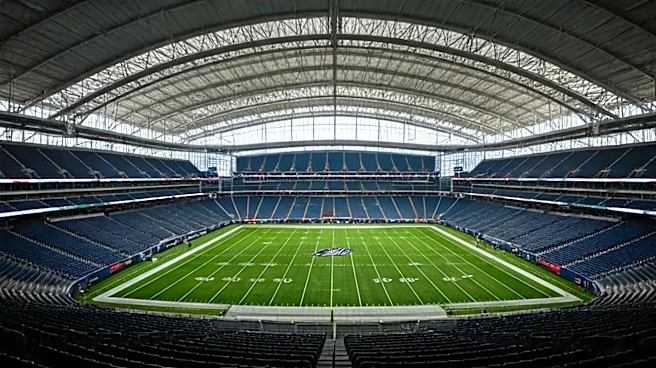
Let’s start with the most obvious and most important feature: the roof. Hosting the world’s biggest sporting event in Texas in June and July presents a significant weather challenge. The heat and humidity can be oppressive for both players and fans, while
the threat of a sudden, torrential thunderstorm can throw carefully planned broadcast schedules into chaos. NRG Stadium’s retractable roof makes all of that irrelevant. It’s an all-weather dome that guarantees games will be played in climate-controlled comfort, regardless of what’s happening outside. For a broadcaster paying billions for rights and an organizing committee managing a global event, this certainty is priceless. It removes the single biggest variable, allowing FIFA to schedule a match in Houston with near-total confidence that it will go off without a hitch.
A Field Fit for the Beautiful Game
FIFA has a non-negotiable rule: World Cup matches must be played on natural grass. This poses a major problem for many modern, multi-purpose domed stadiums in the U.S. that typically use artificial turf. Growing and maintaining an elite-level grass surface indoors, away from direct sunlight, is a massive technical and logistical challenge. But NRG Stadium has a proven solution. For years, the venue has used a palletized tray system, where sections of natural grass are grown outside and then brought into the stadium for assembly before NFL games. The system works, and they’ve perfected it. For the World Cup, Houston’s plan involves installing a high-tech, semi-permanent natural grass surface designed specifically for the tournament's demands. This isn’t a theoretical experiment; it’s an evolution of a system they already know how to manage, giving FIFA confidence in the quality of the playing surface.
A City That Needs No Practice
Hosting a World Cup match is not just about the 90 minutes of soccer. It’s a massive logistical operation involving security, transportation, volunteer management, and fan hospitality. Many cities have to build this capability from the ground up. Houston does not. The city is a seasoned veteran of mega-events. It has hosted multiple Super Bowls (including two at NRG Stadium), NCAA Final Fours, the World Series, and massive city-wide events like the Houston Livestock Show and Rodeo, which draws over two million people. Houston’s police, emergency services, transportation authorities, and hospitality sector have a well-oiled machine for managing enormous crowds. They already have the command centers, the contingency plans, and the institutional memory. For FIFA, plugging into this existing framework is far more practical than building a new one from scratch.
The All-in-One Campus
NRG Stadium isn’t just a stadium; it’s the anchor of NRG Park, a 350-acre complex that includes the NRG Center (a massive convention space) and the NRG Arena. This self-contained “campus” environment is a huge logistical advantage. The surrounding space is perfect for hosting the sprawling fan festivals, hospitality villages, and international media centers that are integral to the modern World Cup experience. Everything is in one place, minimizing complex transportation logistics between different event sites. This consolidated footprint simplifies security and allows for a more cohesive and manageable fan experience. Instead of spreading resources across a dozen different city blocks, organizers can concentrate their efforts on a single, controllable zone.