

What Is 'Americana' Anyway?
On paper, the definition seems clear enough. The Americana Music Association describes it as contemporary music blending elements from American roots styles like country, folk, blues, R&B, and rock. It’s a space for artists who don’t quite fit the polished
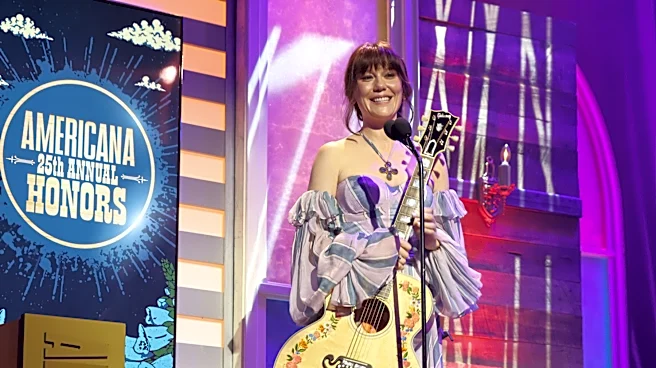
molds of mainstream radio. Think acoustic instruments, storytelling lyrics, and a reverence for the past. This was the haven created in the 1990s for artists like Lucinda Williams and John Prine, whose work was too gritty for Nashville and too country for rock radio. It was, by its very nature, a hybrid—a genre for artists without a genre. The annual awards ceremony at Nashville's Ryman Auditorium is meant to be a celebration of this ethos.
A Big Tent With New Walls
The complication arises when a genre founded on inclusion starts to feel like it has its own gatekeepers. The very idea of an awards show creates boundaries—nominees and winners are “in,” while others are implicitly “out.” This tension is on full display every year. Take Tyler Childers, who just won Album of the Year for Snipe Hunter at the 2026 awards. Years ago, he famously questioned the Americana label itself, feeling his music was simply country. Similarly, Sturgill Simpson has rejected the term, stating he's never played a note of Americana in his life. When artists who are crowned by the genre itself question their place in it, it signals a deeper identity crisis. It begs the question: is Americana a sound, an ethos, or just a marketing category for music that’s hard to classify?
The Voices Redefining the Sound
The debate over purity is most potent when it comes to artists who expand the genre's traditionally understood boundaries. In recent years, a powerful wave of Black artists like Allison Russell, Amythyst Kiah, Rhiannon Giddens, and Joy Oladokun have challenged the genre's cultural preconceptions. They are reclaiming the Black origins of folk, country, and the banjo itself, forcing the community to confront its own blind spots. Likewise, Latinx artists such as Hurray for the Riff Raff and Carrie Rodriguez infuse the genre with sounds from the Caribbean, Mexico, and the Bronx, asking what “American” in Americana truly means. Their presence is not a dilution of the form but a vital correction, reminding us that American roots music has always been a conversation between cultures.
Beyond Labels, A Shared Spirit
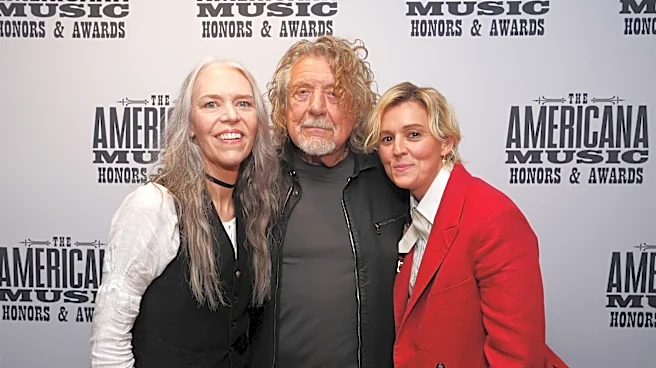
Perhaps the pursuit of a pure definition is a fool's errand. The winners and honorees at the 2026 Americana Awards—from bluegrass virtuoso Molly Tuttle (Artist of the Year) to pop-leaning Brandi Carlile (Song of the Year) and rock legend Robert Plant (Lifetime Achievement honoree)—showcase a wildly diverse sonic palette. What unites them isn't a specific set of chords or instruments. Instead, it seems to be a shared commitment to songwriting as a craft, to lyrical vulnerability, and to an artistic path outside the commercial mainstream. As the artist INK, a first-timer at the recent AmericanaFest, put it, the goal isn't to find another genre to fit into, but to find “the space and the opportunity to show up as myself.” That independent spirit might be the only definition that matters.