









The 'World Feed' Blueprint
Unlike the Super Bowl, which is primarily a domestic U.S. event produced by one network, a global final is a collaborative monster. The magic starts with the “host broadcaster,” an entity appointed by the governing body (like FIFA) to produce a single,
high-quality broadcast known as the “world feed.” This is the standardized version of the game—pristine, neutral, and packed with dozens of camera angles, replays, and basic graphics. This feed is then beamed via satellite to rights-holding broadcasters in over 200 countries. Think of it as the universal canvas. It ensures that a viewer in Tokyo, Buenos Aires, and Cleveland are all seeing the exact same stunning, slow-motion replay of a goal from the exact same angle. It's the foundation upon which the global spectacle is built.
Crafting a Global Drama
A Super Bowl broadcast is brilliant at creating a narrative, but it’s speaking to one primary culture. A global final has to build a story that resonates everywhere. The production isn't just about covering the match; it’s about framing it as an epic drama. Weeks in advance, production teams create slick, cinematic vignettes on star players, historical rivalries, and the journey each team took to get there. These mini-documentaries are often offered as part of the world feed package. By the time the whistle blows, the audience isn’t just watching two teams; they’re invested in Lionel Messi’s last chance at glory or a nation’s quest for its first-ever title. Broadcasters sell a story, not just a sport.
An Army of Cameras and Crew
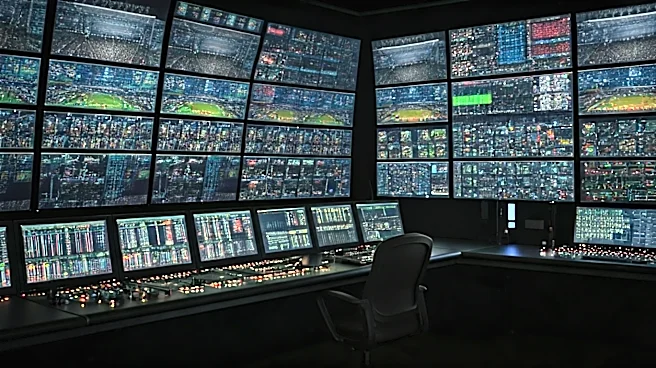
The sheer scale of the operation is difficult to comprehend. A standard professional league game might use 10 to 15 cameras. A Super Bowl might deploy over 100. For a FIFA World Cup Final, the host broadcaster can use more than 40 cameras. This includes everything from tactical cameras high above the pitch to super-slow-motion cameras focused on the goal line, aerial spider-cams that glide over the action, and cinematic cameras capturing player reactions on the bench. Behind this wall of technology is a crew of hundreds, from camera operators and audio engineers to replay specialists and graphics coordinators, all working in a sprawling broadcast compound that looks more like a NASA mission control center than a TV truck.
The Local Touch
Here’s where the experience diverges from the Super Bowl model. While every country gets the same world feed, that’s just the starting point. National broadcasters like Fox Sports in the U.S., the BBC in the U.K., or Globo in Brazil pay billions for the rights to add their own flavor. They set up their own studios overlooking the pitch, staff them with familiar presenters and pundits, and dispatch their own reporters for sideline access. Most importantly, they overlay their own commentary. The passionate, goal-screaming call in Spanish for Telemundo is vastly different from the more reserved tactical analysis on British television. This is called a “unilateral” production—it allows each broadcaster to tailor the global event to its specific audience, wrapping the neutral world feed in a familiar, patriotic, or culturally relevant package.