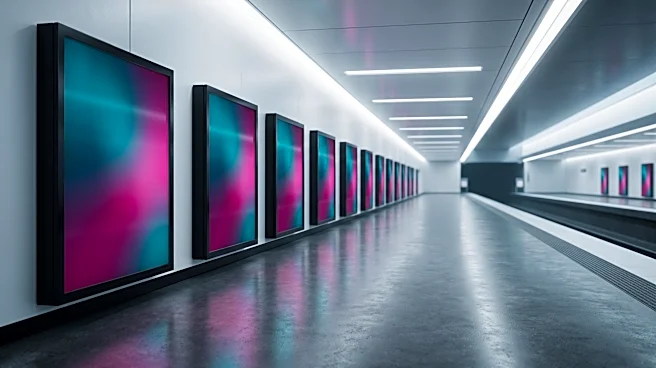







The Unignorable, Captive Audience
The first rule of advertising is getting seen, and in the digital world, that’s harder than ever. People use ad-blockers, skip pre-roll videos, and have trained their eyes to ignore banner ads. But you can't ad-block a subway car. For the duration of their commute,
riders are a truly captive audience, often in environments with spotty cell service. This extended dwell time—the period a person is exposed to an ad—is a marketer's dream. The average subway trip can last over 30 minutes, providing ample, uninterrupted time for a message to sink in. Unlike a fleeting digital ad, a poster or a full train wrap becomes part of the commuter's physical space, seen repeatedly day after day. This constant exposure builds powerful brand recall.
Cutting Through the Digital Noise
September marks the start of a ferocious battle for attention. The fall television season kicks off, award-contending films debut, and streaming services unleash their flagship shows. In this crowded landscape, a purely digital campaign can feel like shouting into the void. A massive subway takeover, however, makes a statement. It transforms a digital product—a show or movie—into a physical event. Station dominations, where every available surface is covered in a single brand's messaging, create an immersive experience that digital ads can't replicate. These campaigns often generate their own social media buzz, as riders snap photos of the eye-catching creative, turning a local ad spend into a national conversation. It’s a way to demonstrate confidence and create a sense of cultural importance. If a show is plastered all over the Times Square station, the thinking goes, it must be a big deal.
Precision in a Sea of People
While subway advertising reaches a massive and diverse audience, it also allows for surprisingly precise targeting. Transit authorities can provide ridership data for specific stations, allowing advertisers to understand the demographic and geographic patterns of commuters. Want to reach the finance professionals who live in the suburbs and commute to Wall Street? Or the creative types who travel between Brooklyn and Manhattan? Different subway lines and stations cater to different audiences. This allows entertainment companies to tailor their campaigns, ensuring their ads for a gritty drama or a lighthearted sitcom are seen by the people most likely to tune in. This hyperlocal capability adds a layer of strategic focus to a medium known for its broad reach.
A Tangible Mark in a Virtual World
Studies have shown that physical ads can have a stronger psychological impact than digital ones. The so-called "Picture Superiority Effect" suggests that people remember images more easily than text, and a large-format, visually stunning subway ad commands attention. Research has also found that many commuters find transit ads to be a welcome distraction, a stark contrast to the often-intrusive nature of online advertising. In a media environment where trust is low and digital fatigue is high, the physical presence of a subway campaign offers a sense of authenticity and permanence. It’s a real-world anchor for a virtual product, creating a level of brand stature and memorability that helps a new premiere not only get noticed but also get remembered.