






Birth of a Colossus
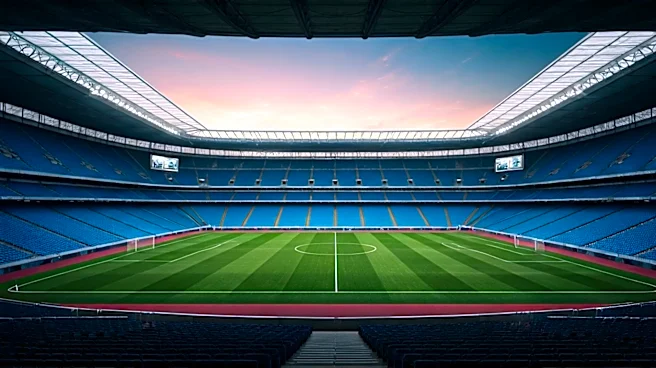
Opened in 1966 and designed by architect Pedro Ramírez Vázquez, the Estadio Azteca was a monument to modern ambition. Built to host events for the 1968 Summer Olympics, its scale was staggering. With an official capacity that has hovered around 100,000
for much of its history (now officially 87,523), the three-tiered bowl was designed to feel both immense and intimate. Its sheer size, combined with Mexico City’s punishing 7,200-foot altitude, created a venue that was not just a stage, but an active participant in every match. Visiting teams didn't just have to beat their opponents; they had to conquer the Azteca itself.
1970: The King's Coronation
The 1970 FIFA World Cup, the first broadcast globally in color, provided the perfect stage for the Azteca’s debut. The tournament is remembered for one team above all: Brazil. Led by Pelé in his final World Cup, the Brazilians played a brand of attacking soccer so beautiful it was nicknamed “Joga Bonito.” In the final, they dismantled Italy 4-1, with Pelé scoring the opening header. The image of him being carried on his teammates’ shoulders, shirtless and holding the Jules Rimet Trophy aloft, cemented both his and the Azteca’s place in football immortality. The stadium also hosted the epic semifinal between Italy and West Germany, a 4-3 overtime thriller dubbed the “Game of the Century,” further securing its reputation for historic drama.
1986: The Hand of God & The Goal of the Century
If 1970 belonged to Pelé, the 1986 World Cup at the Azteca belonged entirely to Diego Maradona. The Argentine genius delivered the most memorable, controversial, and brilliant individual performance in the tournament’s history. In the quarterfinal against England, the Azteca bore witness to two moments that define his legacy. First came the infamous “Hand of God,” a blatant handball that Maradona cheekily credited “a little with the head of Maradona and a little with the hand of God.” Just four minutes later, he scored the “Goal of the Century,” a mesmerizing 60-yard run where he slalomed through half the English team to score. The stadium that had crowned a king 16 years earlier now hosted the game's ultimate anti-hero as he led Argentina to its second World Cup title.
A Fortress for Club and Country
Beyond the World Cup, the Azteca is the feared home ground of Club América, one of Mexico’s most successful and polarizing teams. It’s also the spiritual home of the Mexican national team, “El Tri.” For decades, it served as a nearly impenetrable fortress, especially during World Cup qualifiers against its archrival, the United States. The cacophony of sound, the altitude, and the passionate home crowd created one of the most intimidating atmospheres in international sports. While the U.S. men’s team has found more success there in recent years, the legend of the Azteca as an unconquerable cauldron remains a core part of its identity.
A Historic Third Act: The 2026 World Cup
While the headline's “tomorrow” is a nod to its constant relevance, the stadium's next truly historic date is set. The Estadio Azteca is scheduled to host the opening match of the 2026 FIFA World Cup. In doing so, it will become the first venue in history to host games in three different World Cups. This unprecedented “three-peat” is a testament to its enduring design and unparalleled legacy. Renovations are underway to modernize the 58-year-old icon, preparing it to once again welcome the world. It’s a fitting next chapter for a stadium that has seen it all, ensuring its story is far from over.