
From Utility to Uniform
To understand the v-neck, you first have to understand its predecessor, the crewneck T-shirt. Born as a military undergarment in the early 20th century, the T-shirt was pure function. It was comfortable,
absorbent, and designed to be invisible beneath a uniform. When veterans returned home from World War II, they brought their T-shirts with them, normalizing them as standalone outerwear for the first time. Hollywood sealed the deal. Marlon Brando in 'A Streetcar Named Desire' and James Dean in 'Rebel Without a Cause' transformed the simple white tee from underwear into a potent symbol of youthful rebellion and a new, rugged American masculinity. It was simple, democratic, and a little defiant.
The V's Subtle Intervention
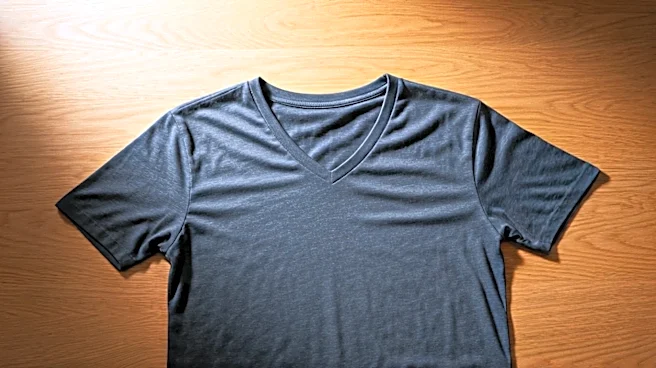
The v-neck emerged as a subtle evolution. While its exact origins are debated, it offered a practical advantage: it could be worn as an undershirt without showing at the collar of an open button-down. This small modification was a game-changer. It allowed the T-shirt to maintain its role as a functional layer while also creating a new aesthetic possibility. The gentle dip of the 'V' elongates the neck and frames the collarbone, offering a silhouette that is slightly more deliberate and flattering than the stark horizontal line of a crewneck. It introduced a hint of intentionality to what was once a purely utilitarian garment. It wasn't trying to be formal, but it also wasn't completely unconsidered.
The Fine Line of Casual Elegance
Here lies the crux of the v-neck’s power: it operates on a razor’s edge. Its success hinges entirely on execution. A well-dressed American in a v-neck isn’t wearing a deep, plunging 'bro-V' popular in the early 2000s reality TV scene. They are wearing a shirt with a modest, subtle V that sits just below the collarbones. The fabric is key—not a flimsy, transparent jersey, but a quality cotton, pima, or blend with enough weight to drape cleanly. The fit is trim but not tight, skimming the body without clinging. This isn't an accident; it's a choice. It says, 'I value comfort, but I also care about silhouette and proportion.' It’s the sartorial equivalent of a perfectly crafted, no-makeup makeup look: effortless in appearance, but achieved through careful consideration.
The Language of Understated Confidence
Today, the v-neck occupies a unique space in the American wardrobe. It’s the perfect shirt for the nation’s default dress code: 'smart casual.' It’s a step up from a standard crewneck but less formal than a polo or button-down. Worn alone, it signals clean, minimalist confidence. Layered under a blazer or a denim jacket, it provides a perfect, unfussy foundation that allows the outerwear to shine. It bridges the gap between weekend lounging and a casual dinner out. In a culture that increasingly prizes authenticity and rejects overt formality, the v-neck is a quiet hero. It doesn’t shout for attention. Instead, it speaks in a confident whisper, communicating a modern American ideal: looking good without looking like you tried too hard.