
The Anatomy of a Blown Call
Every major officiating controversy begins with the same ingredients: high stakes, immense speed, and human fallibility. In the NBA Playoffs, it might be a phantom foul called on a star player in the final
minute of Game 7. Think of the endless debates over moving screens or whether a defender was in the restricted area. The action is so fast, the bodies so big, and the rules so minutely detailed that perfect, universally-agreed-upon officiating is a statistical impossibility. The 2002 Western Conference Finals between the Lakers and Kings remains a textbook example, a series so riddled with questionable fourth-quarter calls that it lives on in NBA infamy two decades later. On the World Cup stage, the scale is global. A missed offside call or a dive that earns a penalty isn’t just a game-changer; it’s a national incident. For every elegant goal, there’s a moment like Thierry Henry’s handball that helped France qualify for the 2010 World Cup over Ireland—a blatant, uncalled violation that became an international diplomatic and sporting crisis. The core issue is identical: a split-second judgment under pressure that carries an unbearable weight.
The Tech Trap: Replay vs. VAR
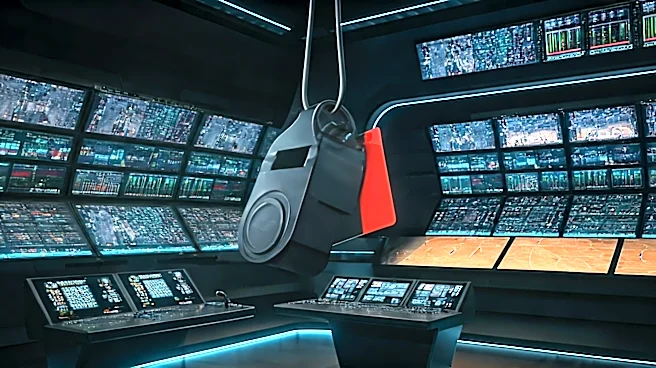
Logically, the solution to human error is technology. But as both sports have learned, technology just creates a new, more frustrating type of controversy. The NBA has leaned into its high-tech Replay Center in Secaucus, New Jersey, a command hub that can review close plays from dozens of angles. Yet, it has only amplified arguments. Fans now debate the angles, the interpretation of the replay official, and the agonizingly long delays that kill a game’s momentum. Worse, it creates a second injustice: the calls that *aren't* reviewable, making the system feel arbitrary. Soccer’s equivalent is the Video Assistant Referee (VAR), an even more divisive system. Introduced to eliminate 'clear and obvious errors,' VAR has become a lightning rod. The process is famously opaque, with fans in the stadium often clueless as a silent check occurs. The debates now center on microscopic offside decisions—an armpit or a toe straying past the line—and subjective handball calls, turning a fluid game into a forensic exercise. In both cases, the technology promised objective truth but delivered subjective interpretation, just with more cameras.
The Firestorm: Media, Fans, and Fallout
Once the controversial call is made, its journey through the sports ecosystem begins. Here, the paths of the NBA and World Cup diverge slightly before meeting again on social media. In the U.S., an NBA officiating controversy fuels a week-long content cycle. TV debate shows like ESPN’s *First Take* spend hours dissecting the play. The NBA, in a nod to transparency, releases its “Last Two Minute Report,” which often confirms the blown call, validating fans’ anger while offering no actual remedy. It's a uniquely American media spectacle. For the World Cup, the reaction is less about talk-show debate and more about raw, nationalist passion. A bad call against Brazil or England isn’t just a sports story; it’s front-page news, a perceived attack on national pride. The media reaction is ferocious and often conspiratorial. Yet, in the modern era, both firestorms converge online. Twitter (now X) becomes a global jury, with fans, athletes, and pundits sharing slow-motion replays and memes, creating a unified, borderless wave of outrage that leagues and governing bodies can no longer ignore.
The Legacy of Injustice
Ultimately, the reason these controversies travel so far and last so long is because they tap into a fundamental sense of unfairness. A championship won or lost on a referee's whistle feels stolen, and that narrative becomes an indelible part of a team’s or a player’s legacy. The Sacramento Kings of the early 2000s are remembered as much for being “robbed” in 2002 as for their brilliant style of play. In soccer, the stain of a controversial goal can follow a player forever. The calls define not just results, but history. Whether it’s a whistle in a packed NBA arena or a flag raised in a stadium halfway across the world, the journey of an officiating controversy follows a predictable and painful path. It’s born from human error, amplified by technology that promised a cure, and immortalized by a global chorus of fans who just wanted a fair game.