


A Partnership on the Rocks
To understand why Toy Story 3 was stalled, you have to go back to the original deal between Pixar and Disney. The initial agreement gave Disney full ownership of Pixar's films and characters, including the rights to make sequels. This wasn't a problem
at first, but as Pixar, led by Steve Jobs, churned out hit after hit, the relationship with Disney's then-CEO Michael Eisner began to sour. The two famously strong-willed executives clashed over control and finances. The tension boiled over when they disagreed on whether sequels, like the massively successful Toy Story 2, should count toward their multi-picture deal. By January 2004, the partnership had completely fractured, with Jobs announcing Pixar would seek a new distributor after its contract ended.
Disney’s Backup Plan: Circle 7
Faced with losing his company's biggest hit-maker, Michael Eisner initiated a bold and controversial backup plan. If Pixar wouldn't make sequels for Disney, Disney would make them itself. In 2004, the company launched a new CGI studio called Circle 7 Animation. Its sole purpose was to create sequels to the beloved Pixar properties that Disney owned, including Monsters, Inc., Finding Nemo, and, most importantly, Toy Story. Derisively nicknamed "Pixaren't" by animators, the studio was seen as a bargaining chip in the tense negotiations with Pixar. It was also Eisner’s way of proving that Disney didn't need Jobs or Pixar to continue these lucrative franchises. Work began immediately on a script for Toy Story 3.
The Toy Story 3 We Almost Got
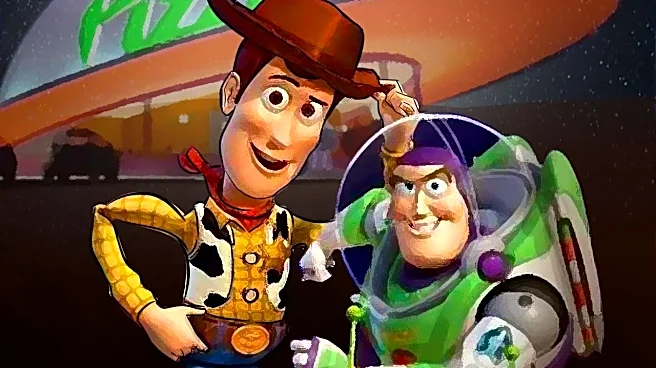
The version of Toy Story 3 developed at Circle 7 was radically different from the film that eventually graced our screens. The plot centered on Buzz Lightyear starting to malfunction. Andy's mom ships him back to the factory in Taiwan for repairs, but the other toys soon discover a horrifying truth: the entire line of Buzz Lightyear toys is being recalled and destroyed. This discovery launches Woody, Rex, Slinky, and the rest of the gang on an international rescue mission to save Buzz from being crushed at the factory. The script included new toy characters and a sequence where the gang escapes a daycare center in a makeshift vehicle, but the emotional core was a globe-trotting adventure, not the poignant farewell to childhood that defined the final film.
A Corporate Shakeup Changes Everything
While Circle 7 was deep in development, a dramatic shift was happening in Disney's boardroom. In 2005, Michael Eisner stepped down and was replaced by Bob Iger. Iger recognized that Disney's own animation output had been struggling, and he knew that alienating Pixar was a monumental mistake. One of his first priorities was to repair the fractured relationship with Steve Jobs. Those renewed talks led to a stunning conclusion: in January 2006, Disney announced it would acquire Pixar for $7.4 billion. The deal put Pixar's creative leadership, including John Lasseter and Ed Catmull, in charge of all of Disney Animation. With Pixar now in control of its own destiny, there was no longer a need for a separate studio to make its sequels.
Pixar Starts Over from Scratch
With the acquisition complete, Disney promptly shut down Circle 7 Animation in May 2006. The studio never released a single film. The scripts for its versions of Toy Story 3, Monsters, Inc. 2, and Finding Nemo 2 were completely shelved. Pixar's creative team, wanting a fresh start, deliberately avoided reading the Circle 7 script. They went back to square one, brainstorming a story that felt true to the characters they had created. Instead of a recall plot, they landed on a more universal and emotionally resonant idea: what happens when a child outgrows their toys? The result was the story of Andy heading off to college, a film that became a critical and commercial masterpiece, earning an Oscar nomination for Best Picture.