


1. The W-M Formation: Finding the First Blueprint
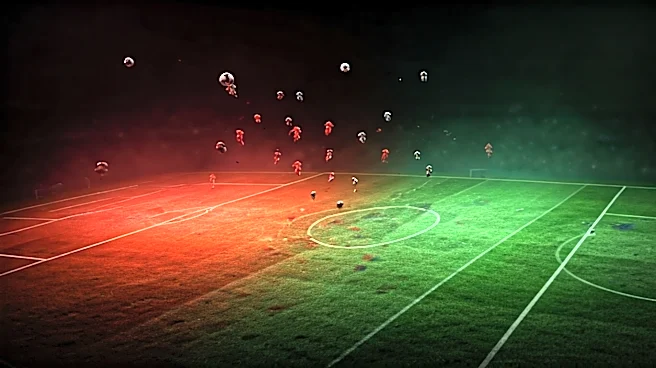
In the early days, soccer looked like organized chaos. Players chased the ball in a swarm. The first great tactical shift brought order. Conceived in the 1920s and dominant through the 1950s, the “W-M” formation was revolutionary for its structure. From an overhead view, the five attackers formed a ‘W’ shape and the five defenders and midfielders formed an ‘M’. This created defined roles and balanced the pitch between attack and defense for the first time. Brazil’s 1958 triumph, featuring a young Pelé, was a masterclass in a flexible version of this system. It established the idea that winning wasn't just about having the best players, but about deploying them in the smartest way. It was the game’s first strategic blueprint, turning a chaotic
kickabout into a chess match.
2. Catenaccio: The Art of the Door-Bolt
If the W-M was about balance, Catenaccio was about breaking the system. Italian for “door-bolt,” this was the tactical equivalent of building a fortress. Popularized in Italy in the 1960s, it reached its World Cup peak with the Italian national team. The idea was simple but brutal: defend, defend, defend. Teams would pack their own penalty area, often deploying a “sweeper” or “libero”—a free-roaming defender behind the main backline to clean up any mistakes. The goal was to frustrate opponents into making a fatal error, then strike with a devastatingly quick counter-attack. To modern eyes, it looked like the ultimate “park the bus” strategy. It wasn't always pretty, but it was brutally effective, proving that a team could win a World Cup not by outscoring the opponent, but by out-suffocating them.
3. Total Football: The Positionless Revolution
Just as the game seemed locked in a defensive stranglehold, the Dutch arrived in 1974 with a concept that blew everyone’s mind: Total Football. The philosophy, perfected by coach Rinus Michels and personified by the genius Johan Cruyff, was that any outfield player could and should take over the role of any other player in the team. A defender could suddenly become a marauding attacker, and a forward would track back to make a tackle. It was a fluid, interchanging system that relied on supreme technical skill, intelligence, and physical fitness. The Netherlands didn't win the 1974 final, but their mesmerizing, geometric style changed the sport's DNA. They showed the world that a team could be an organism, not a collection of fixed parts, influencing generations of coaches from Barcelona to the Premier League.
4. The Pressing Game: Hunting in Packs
For decades, defending was a passive art. You’d get back into your shape and wait for the other team to come to you. Then, a new, aggressive philosophy took hold: what if we tried to win the ball back immediately, right where we lost it? This is the essence of pressing. While it had existed in various forms, it became a dominant global strategy in the 2000s and 2010s. Instead of retreating, teams would swarm the player with the ball, cutting off passing lanes and forcing turnovers high up the pitch. Germany’s 2014 World Cup-winning side was a brilliant example, using a coordinated team press to disrupt opponents and launch immediate attacks. This proactive, high-energy style made the game faster and more physically demanding than ever, shifting the focus from individual defensive duels to collective, suffocating pressure.
5. Tiki-Taka vs. The Counter: The Modern Duel
The 2010 World Cup felt like a tactical endpoint. Spain, with their “tiki-taka” style, conquered the world by simply refusing to give the ball away. They passed opponents into submission, starving them of possession in a dizzying carousel of short, precise movements. It was the ultimate evolution of a possession-based game. But victory creates its own antidote. Teams realized they couldn't out-pass Spain, so they stopped trying. The new blueprint, perfected by teams like France in 2018, was tactical pragmatism. They would happily concede possession, maintain a disciplined defensive shape, and then explode forward on the counter-attack with terrifying speed and efficiency. This duel—between teams that want the ball and teams that are deadly without it—defines the modern tactical landscape of the World Cup.