





Forged in Conflict
To understand Luka Modrić’s profound connection to the Croatian national team, one must look past the stadiums and trophies to his childhood. He was just six years old when the Croatian War of Independence erupted in 1991. The conflict forced his family
to become refugees after his grandfather was killed and their home was burned down. The family fled to the city of Zadar, where Modrić spent years living in refugee hotels. It was in the parking lots of these hotels, with shells sometimes falling on the city, that his relationship with a soccer ball began. This difficult upbringing, escaping the realities of war through soccer, didn't just shape him as a person; it forged a steely determination and a deep, unbreakable bond with his homeland that would later define his international career.
The On-Field Conductor
While his backstory provides the emotional foundation, his on-field genius gives it form. Modrić is not a player of explosive power or flashy tricks, but one of sublime intelligence and control. As a midfielder, he dictates the tempo of the game, acting as his team's central nervous system. His vision, precise passing, and relentless work rate make him both an offensive creator and a defensive asset. Despite his small stature, a trait for which he was rejected by a club in his youth, he developed a mental fortitude that allows him to dominate games. For Croatia, he is more than just a player; he is the on-field coach, the leader who makes everyone around him better and ensures the team functions as a cohesive unit.
Russia 2018: A Nation's Hero
While Modrić made his debut for Croatia in 2006, the 2018 World Cup in Russia was the tournament that cemented his legacy. As captain, he led a nation of just four million people on an improbable journey to the final. Through grueling knockout stages that saw Croatia win three consecutive extra-time matches, Modrić was the constant, driving force. He scored a stunning goal against Argentina in the group stage and was flawless in two penalty shootouts. Though Croatia fell to France in the final, Modrić's performance throughout the tournament was recognized with the Golden Ball award for the best player. He returned to Croatia not as a defeated finalist, but as a national hero who had shown the world the fighting spirit of his country.
The Ageless Wonder
Most players would have considered the 2018 final the pinnacle, but Modrić’s dedication is legendary. Proving age is just a number, he has continued to lead Croatia with the same passion. He captained the team to a third-place finish at the 2022 World Cup in Qatar, earning the Bronze Ball for his efforts. He has participated in every European Championship from 2008 to 2024, becoming the tournament's oldest-ever goalscorer at age 38 in 2024. His longevity is a testament to his professionalism and unwavering commitment to representing his country. While newer stars emerge, Modrić remains the undisputed leader, a calming presence and a mentor to the next generation.
More Than a Captain
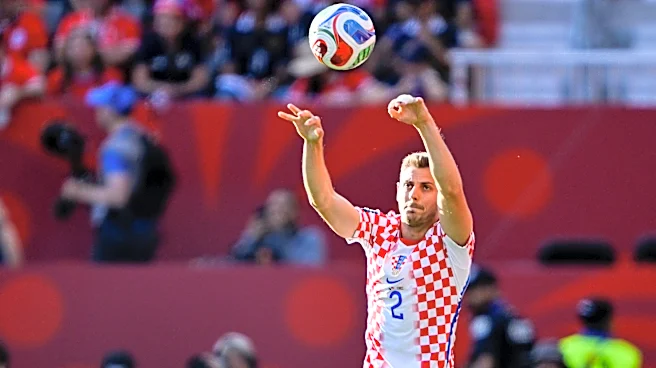
The term "soul" is often overused in sports, but for Luka Modrić and Croatia, it fits perfectly. He is the living link to the nation's struggle for independence and its subsequent rise on the world stage. His leadership is quiet but absolute, built on a foundation of humility, hard work, and an intense love for his country. He represents the idea that a small nation can compete with and defeat global giants through talent, unity, and an unbreakable will. He is not just the captain on the field; he is the keeper of the team's identity, the man who embodies the spirit of the Croatian people every time he wears the checkered shirt.